What if a movie could be edited faster, a game could adapt to every player, and a streaming platform could predict what audiences want before they search for it? That is no longer a futuristic idea. AI in entertainment is already changing how content is created, delivered, and experienced.
From AI-generated visuals and smarter production workflows to personalized recommendations, virtual performers, adaptive gaming, and faster content localization, the technology is reshaping nearly every part of the industry. It is helping entertainment companies work faster, understand audiences better, and build more engaging experiences.
However, this shift also brings difficult questions around copyright, creative ownership, performer rights, authenticity, and the future role of human talent. This blog explores how AI is transforming the entertainment industry in 2026, where it is making the biggest impact, and what businesses should consider before adopting it.
What Is the Role of AI in Entertainment Industry?
The role of AI in entertainment industry is to help create, personalize, distribute, and optimize content by analyzing data, automating repetitive tasks, and supporting faster, more informed creative and business decisions.
AI in entertainment industry is used across film, television, music, gaming, streaming, and live events. It supports script analysis, video editing, visual effects, animation, music production, content recommendations, audience targeting, dubbing, subtitling, and demand forecasting.
Entertainment companies use AI for entertainment to reduce production time, improve content discovery, understand audience preferences, and create more interactive experiences. However, it works best as a support tool that enhances human creativity rather than replacing writers, artists, performers, directors, and other creative professionals.
How Does AI Work in Entertainment?
AI in entertainment industry works by processing large amounts of data, identifying patterns, and helping businesses automate tasks, understand audience behavior, and create more personalized experiences. Different AI technologies support different parts of content creation, production, distribution, and engagement.
Machine Learning
Machine learning analyzes viewing, listening, and interaction data to identify audience preferences and behavior patterns. Streaming platforms, music apps, and gaming companies use these insights to improve recommendations, engagement, and content decisions.
Generative AI
Generative AI creates new content such as scripts, images, music, voice, animation, and video. It can support creative teams during brainstorming, storyboarding, editing, localization, and early-stage production while keeping human professionals involved in final decisions.
Natural Language Processing
Natural language processing helps AI understand and generate human language. In entertainment, it supports script analysis, subtitle creation, voice search, content tagging, chatbot experiences, and multilingual localization.
Computer Vision
Computer vision allows AI systems to understand images and video. It is used for video editing, scene detection, animation, visual effects, facial analysis, object tracking, content moderation, and production quality checks.
Recommendation Engines
Recommendation engines analyze user activity, preferences, ratings, and content history to suggest relevant movies, shows, songs, games, and other entertainment. These systems help users discover content and improve audience retention.
Predictive Analytics
Predictive analytics uses historical and real-time data to forecast audience demand, content performance, ticket sales, subscription behavior, and marketing results. Entertainment companies can use these insights to support production planning, pricing, promotion, and release strategies.
How Is AI Used Across Different Entertainment Segments?
AI is used differently across the entertainment industry depending on the type of content, audience, and business model. The table below highlights some of the most common applications.
| Entertainment Segment | Common AI Applications |
| Film and Television | Script analysis, video editing, visual effects, casting support, animation, and content localization |
| Music | Composition, audio mastering, music recommendations, voice generation, and royalty tracking |
| Streaming | Personalized recommendations, content discovery, audience analysis, dubbing, and subtitle generation |
| Gaming | Intelligent non-player characters, automated testing, adaptive gameplay, procedural content generation, and player analytics |
| Live Events | Audience analytics, ticket pricing, crowd management, lighting, sound optimization, and event personalization |
| Social Media | Content creation, moderation, trend analysis, audience targeting, and performance tracking |
These applications show that AI in entertainment is not limited to content creation, it also supports production, distribution, audience engagement, monetization, and operational decision-making across different entertainment segments.
Also Read: AI in Logistics and Supply Chain Management: Key Use Cases, Benefits, and Future ScopeExamples of AI Innovations in 2026-2027
AI in entertainment has evolved rapidly with breakthrough tools redefining content creation and production workflows.
- Sora by OpenAI (2025): Enables high-quality text-to-video generation, allowing studios to create scenes, trailers, and concept visuals instantly.
- AI Music Generation Platforms: Tools like Suno and Udio are producing studio-quality music tracks, helping creators generate soundtracks without traditional production.
- AI Casting Tool: Platforms now analyze actor data, audience sentiment, and role requirements to suggest optimal casting decisions.
- Runway Gen-2 & Gen-3: Used for video editing, scene generation, and visual storytelling, reducing production timelines significantly.
- AI Voice & Dubbing Systems: Netflix and Disney are expanding AI dubbing to deliver multilingual content faster than ever.
Organizations leveraging advanced custom AI solution development are uncovering innovative ways to engage audiences, enhance operational efficiency, and drive unparalleled innovation. This powerful integration of AI is reshaping the future of the entertainment industry.
- With a projected CAGR of 25.7%, the AI market in media and entertainment is expected to skyrocket, reaching a value of $44.08 billion by 2028, as a business research company reported.
- In early 2025, Netflix launched an AI dubbing system that translated shows into 20+ languages in real time.
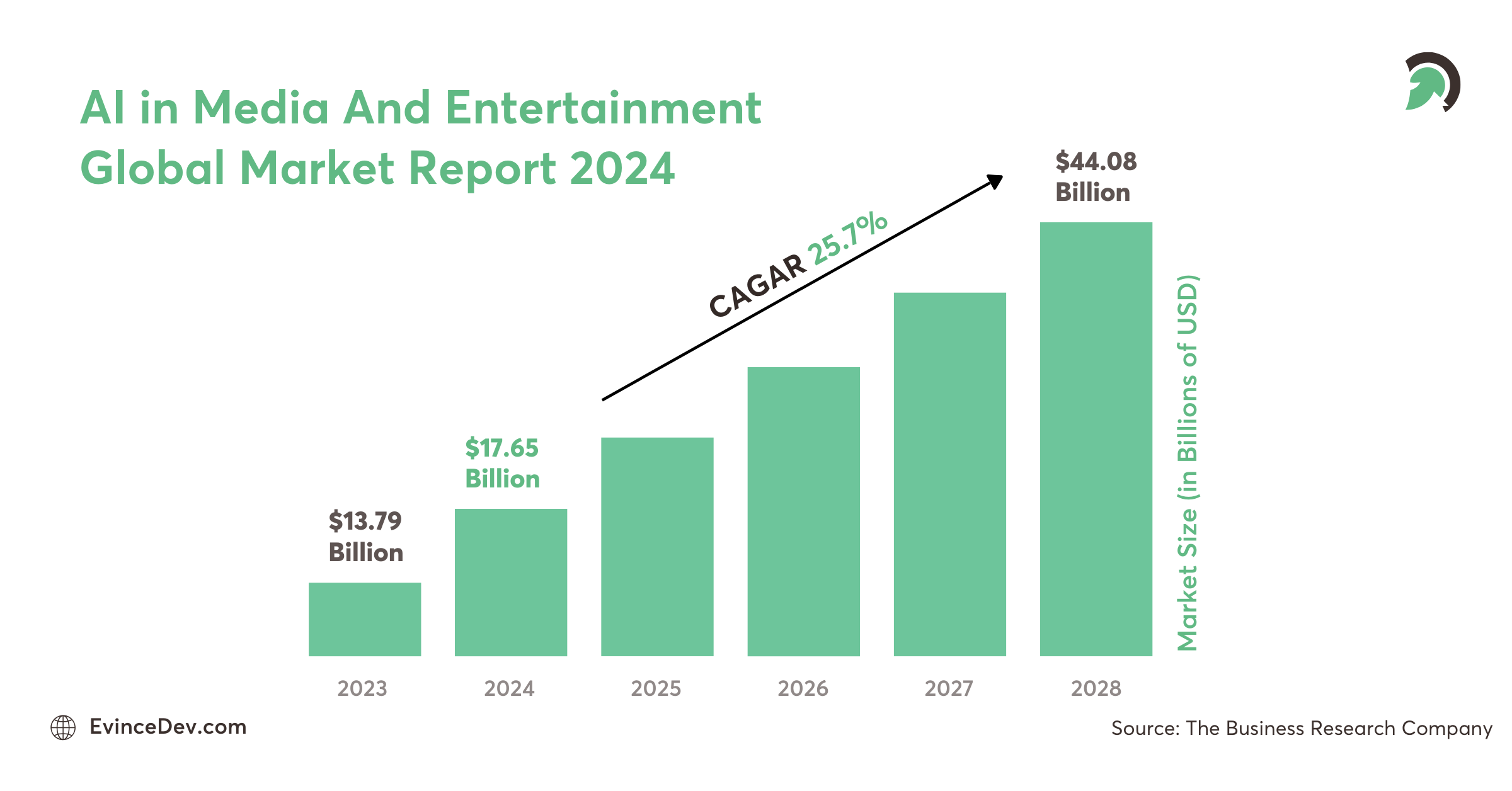
AI in media and entertainment is projected to grow at a CAGR of 25.7%, reaching $44.08B by 2028, driven by innovation and automation demand.
AI in Streaming Platforms (Netflix, Spotify, YouTube)
AI is transforming streaming platforms by improving personalization, accessibility, and content delivery.
- Hyper-personalized recommendations based on behavior and preferences
- AI-generated dubbing and subtitles for global reach
- Dynamic content previews tailored to user interests
- AI DJs and curated playlists for real-time engagement
AI in Gaming and Interactive Entertainment
Gaming is one of the fastest-growing areas for AI innovation.
- Smart NPCs (Non-Playable Characters) that adapt to player behavior
- Procedural content generation for endless game environments
- AI-powered VR/AR experiences for immersive gameplay
- Real-time difficulty adjustment based on player skill
AI helps create dynamic, personalized, and engaging gaming experiences.
AI in Live Events, Concerts, and Performances
AI is reshaping how live entertainment is produced and experienced.
- AI-powered virtual concerts and digital avatars
- Real-time audience analytics and engagement tracking
- Adaptive lighting and sound systems based on crowd reactions
- Hybrid events combining physical and virtual experiences
These innovations are expanding global reach and improving audience interaction.
Role of AI in Shaping Entertainment
AI has become a game-changer for entertainment, integrating seamlessly into content creation, distribution, and user engagement strategies.
- Enhanced Content Recommendations: Enhanced Content Recommendations – Platforms like Netflix and YouTube use AI to analyze viewing behavior, making sure every recommendation feels handpicked.
- Real-Time Personalization: Spotify’s AI DJ, introduced in 2024, uses generative AI to curate dynamic, mood-based playlists for users in 2026.
- Creative Storytelling Tools: Directors and writers are now experimenting with Runway Gen-2, which helps visualize scripts and refine storyboards before production.
What Are the Benefits of AI in Media and Entertainment?
AI brings numerous advantages to the entertainment and media industries, driving growth, enhancing audience engagement, and streamlining various processes.
- Cost Efficiency: Automated editing, animation, and script generation cut down production time and costs.
- Content Optimization: AI studies audience engagement metrics, helping creators fine-tune stories for maximum impact.
- Improved Accessibility: Platforms like Disney+ are testing AI-generated multilingual dubbing, making content available globally within days.
- Audience Insights: Advanced analytics reveal what viewers truly want, shaping future projects.
- Smarter Marketing: AI predicts which campaigns will perform best, allowing companies to target audiences with precision.
Prominent Use Cases of AI in Entertainment and Media
AI business ideas are redefining entertainment, offering solutions to enhance workflows and craft engaging, immersive experiences that capture audience attention globally. Here are some of the most practical AI use cases every business should know, especially for media, entertainment, streaming, gaming, and live event companies looking to improve creativity, personalization, and operational efficiency.
Let’s dive into the top applications shaping the future of media and entertainment:
Content Creation Powered by AI
Modern AI application development enables content creators to innovate, automate repetitive tasks, and produce higher-quality outputs faster. AI is reshaping how films, music, and digital content are created and distributed.
- Automated Scriptwriting: AI tools analyze audience preferences, market trends, and popular genres to generate engaging scripts for targeted demographics. This reduces the creative workload and ensures stories resonate with audiences.
- Visual Effects and Animation: AI software automates complex visual effects, from creating lifelike animations to enhancing CGI, helping producers save costs and deliver visually stunning content faster.
- Music Composition: AI algorithms analyze melodies, rhythms, and emotional tones to create original compositions tailored for films, advertisements, and games, offering unique musical experiences.
- Content Localization: AI-powered tools translate and dub content into multiple languages, enabling global distribution while maintaining cultural and emotional nuances.
Key Benefits:
- Faster production timelines and cost savings.
- Enhanced creative flexibility for producers and artists.
- Wider audience reach through multilingual localization.
Rise of AI in Gaming and Interactive Media
The gaming industry is among the most dynamic adopters of AI development solutions, leveraging it to craft smarter, immersive, and highly personalized player experiences. AI enriches both the technical and creative aspects of game development.
- Intelligent NPCs (Non-Playable Characters): AI drives realistic NPC behavior, making characters adaptive and engaging, leading to more lifelike interactions for players.
- Dynamic Game Environments: AI creates ever-changing game worlds by analyzing real-time player actions, keeping experiences fresh and engaging.
- AI in VR/AR Gaming: AI powers VR and AR gaming to deliver immersive experiences where players can interact seamlessly with virtual environments.
Key Benefits:
- Adaptive gameplay that suits different skill levels.
- Realistic and engaging interactions with AI-powered NPCs.
- Enhanced realism in VR/AR for unforgettable gaming experiences.
AI’s Role in Marketing and Distribution
AI transforms marketing and distribution of entertainment content, enabling data-driven decisions that optimize reach and engagement. Companies rely on AI development solutions to gain a competitive edge.
- Predictive Analytics: AI tools analyze market trends, audience preferences, and historical data to predict box office performance and optimize release schedules.
- Targeted Advertising: AI identifies specific user behaviors and demographics to create personalized marketing campaigns, increasing click-through rates and audience retention.
- Content Monetization Insights: AI tracks viewing habits and engagement data, helping platforms identify which content generates the highest revenue and popularity.
Key Benefits:
- Improved ROI for advertising campaigns.
- Data insights drive smarter distribution strategies.
- Enhanced audience targeting with tailored marketing efforts.
AI in Live Events and Performances
AI has revolutionized live entertainment by enhancing audience experiences and giving organizers valuable data insights. It improves every aspect of the live performance ecosystem, from concerts to sports events.
- Real-Time Lighting and Sound Adjustments: AI systems adapt lighting and sound effects based on audience reactions, delivering dynamic, synchronized performances.
- Virtual Concerts and Hybrid Events: AI allows artists to host virtual concerts and hybrid live events, offering global audiences an immersive digital experience.
- Audience Analytics: AI tools track attendee engagement, feedback, and behavior during events, providing organizers with actionable insights to refine future performances.
Key Benefits:
- Enhanced audience engagement during live events.
- Broader reach through virtual concert capabilities.
- Data-driven improvements for future event planning.
AI for Personalization and User Experience
In streaming and digital media, AI delivers hyper-personalized experiences, boosting engagement and user satisfaction. Platforms rely on AI development solutions to cater to diverse audience preferences.
- Recommendation Engines: AI algorithms analyze user behavior, preferences, and viewing habits to suggest tailored content, keeping audiences engaged longer.
- Personalized Playlists: AI curates music, video, and gaming playlists based on individual tastes, moods, or viewing history.
- Custom Interfaces: AI personalizes app interfaces, optimizing layout and navigation to suit each user’s behavior.
Boost user experience with AI-powered personalization tools that deliver tailored content and seamless engagement across digital platforms.
Key Benefits:
- Improved user retention and satisfaction.
- Increased content consumption through better recommendations.
- Seamless user interactions with custom interfaces.
AI in Film Pre-Production and Casting
AI is now a critical part of the film pre-production process, helping filmmakers make informed creative and logistical decisions.
- Script Analysis: AI evaluates scripts for potential audience appeal, box office performance, and cost efficiency before production starts.
- Casting Suggestions: AI tools analyze character profiles and actor data to recommend ideal casting choices based on roles.
- Budget Optimization: AI identifies ways to optimize budgets by analyzing production schedules, location costs, and resource allocation.
Key Benefits:
- Streamlined pre-production processes.
- Improved casting accuracy for diverse roles.
- Cost-effective production planning.
AI-Powered Visual Storytelling with Deepfake Technology
Deepfake technology transforms visual storytelling by enabling hyper-realistic visual effects and seamless integration of CGI with live-action footage.
- Hyper-Realistic Effects: AI-powered deepfakes allow filmmakers to recreate actors, historical figures, or fictional characters accurately.
- Virtual Avatars in Media: AI creates lifelike virtual influencers and avatars for media campaigns, offering new storytelling opportunities.
Key Benefits:
- Reduced production costs for complex visual effects.
- Enhanced storytelling possibilities with realistic visuals.
- Innovative marketing strategies using virtual avatars.
Business Side: AI for Revenue Optimization
AI drives efficiency and profitability for entertainment companies by streamlining operations and uncovering new revenue streams.
- Dynamic Pricing: AI analyzes demand patterns to adjust event ticket prices, maximizing sales and revenue.
- Royalty Tracking: AI systems monitor platform content usage, ensuring creators receive accurate royalties.
- Subscription Models: AI predicts churn rates and recommends strategies to retain subscribers for streaming services.

Unlock higher profits with AI-powered business solutions designed to drive growth, optimize performance, and maximize revenue potential.
Businesses using custom software development tailored to entertainment needs are reaping these benefits while scaling their operations.
Challenges and Ethical Considerations
While AI offers transformative benefits to the entertainment industry, it also brings challenges that demand thoughtful and responsible solutions to ensure fair and ethical use.
Data Privacy
Personalized entertainment depends on massive amounts of user data, but this raises serious privacy concerns. Companies must balance innovation with transparency, following strict data laws while reassuring audiences their personal information is safe and respected.
Job Displacement
Automation speeds up production but also threatens traditional creative roles such as editors, scriptwriters, and animators. To soften the impact, companies need to provide reskilling opportunities, helping professionals adapt to AI-assisted workflows instead of being replaced.
Bias in AI
AI reflects the data it’s trained on. If that data contains stereotypes, algorithms may reinforce them. This could lead to unfair casting suggestions or limited representation, requiring conscious efforts to diversify training data and outputs.
Copyright Issues
The debate over ownership of AI-generated works intensified in 2026 when U.S. courts ruled they cannot be copyrighted without human contribution. This raises questions about intellectual property rights and fair recognition in an increasingly AI-driven industry.
Deepfake Regulation
With deepfake technology advancing rapidly, the EU’s AI Act (2025) established strict guidelines for disclosing synthetic media. While it safeguards against misinformation, creators now face added compliance responsibilities when experimenting with this powerful visual storytelling tool.
Authenticity Concerns
Audiences often crave genuine creativity and emotional depth. Overreliance on AI risks producing entertainment that feels formulaic or artificial. Striking the right balance between human imagination and machine efficiency is essential to maintain authentic audience connections.
Cost Barriers
Large corporations easily adopt advanced AI tools, but smaller studios face financial hurdles. High setup and licensing costs create an uneven playing field, making it harder for independent creators to compete and experiment with innovation.
What Are Real-World Examples of Artificial Intelligence in Media and Entertainment
AI is already making waves in media and entertainment, with several real-world applications transforming the landscape.
Explore how AI is revolutionizing media and entertainment by enhancing content creation, distribution, personalization, and user engagement.
- Netflix: Expanded AI-driven recommendations and AI dubbing tools
Netflix has moved beyond basic recommendations in 2026. Its AI systems now predict not just what you might like but when you’ll watch it. They’ve also introduced real-time AI dubbing, letting shows launch globally in multiple languages simultaneously. - Disney: Pioneered deepfake visual effects for lifelike character recreations
Disney continues to lead in cinematic innovation, using AI-powered deepfake technology to create lifelike character recreations. This allows them to bring back beloved characters with emotional depth, while cutting production costs and elevating storytelling to an entirely new level. - Warner Bros: Uses AI to test trailers and optimize marketing campaigns
Warner Bros. now relies on AI to analyze audience reactions to trailers before release. These insights guide editing, pacing, and messaging, ensuring campaigns are more impactful. The result is smarter, data-driven marketing that resonates globally. - Spotify: Continues to lead in AI-curated music discovery
Spotify has become a daily companion for millions by using AI to curate playlists that match moods, activities, and even current events. Its AI DJ feels like a personal music guide, deepening user engagement and discovery. - Universal Music Group: Partnered with startups to launch licensed AI-generated music in 2026
Universal Music Group has embraced the future by collaborating with AI music startups. Their 2026 releases include licensed AI-created songs, offering fresh opportunities for artists while protecting intellectual property and opening new revenue streams for the music industry. - Japan’s Anime Industry: Debuted its first AI-assisted anime series in 2026
Japan’s anime industry introduced its first AI-assisted series this year, combining traditional artistry with machine-driven animation support. The result was faster production timelines, reduced costs, and visuals that pushed the creative boundaries of storytelling loved by global audiences. - Meta’s Horizon Worlds: Hosts AI-powered immersive concerts with virtual avatars
Meta’s Horizon Worlds has turned concerts into futuristic spectacles. Using AI, artists perform as lifelike avatars in virtual spaces, allowing fans worldwide to enjoy shared, immersive shows without physical barriers. It’s a glimpse of entertainment’s future.
Future Trends: The Path Forward
The future of AI in entertainment is exciting, with several trends set to dominate the industry.
- AI-Powered Virtual Influencers: These digital personas will interact with audiences, promoting brands and products in innovative ways.
- Real-Time Audience Feedback: AI tools will analyze live audience reactions, helping creators adapt content instantly.
- Blockchain Integration: AI and blockchain technologies will streamline copyright protection and royalty distribution.
Companies investing in AI application development will stay ahead by embracing these trends and adapting to evolving consumer expectations.
Embracing AI for a Smarter Entertainment Industry
Impact of AI in Entertainment is profound, shaping how we experience and engage with media. From personalized content recommendations to interactive gaming, AI continues to elevate the industry. Businesses adopting entertainment app development services are unlocking growth opportunities and meeting audience demands.
For companies seeking AI app development services and AI solutions development in the USA, EvinceDev is a trusted partner for building scalable, business-ready AI systems.
Take the first step today by scheduling a FREE Consultation with EvicneDev. Let them help you transform your ideas into reality with the power of AI-driven innovation.
AI is not just a tool; it’s the future of entertainment. By harnessing its potential, businesses can innovate, thrive, and captivate audiences like never before.