Credit Risk Assessment Software Development
Build scalable AI credit scoring solutions that enhance credit risk assessment, streamline underwriting, and support smarter financial operations.
Talk to Our FinTech Expert






As lending ecosystems evolve and data sources expand, relying on traditional credit scoring methods limits accuracy, slows decision-making, and increases risk exposure across financial operations.
Leverage AI-powered credit scoring models to evaluate borrower risk using real-time data, behavioral patterns, and predictive analytics.
Build adaptive machine learning credit scoring systems that continuously improve accuracy based on evolving financial data and user behavior.
Enhance decision-making with alternative credit scoring software that incorporates non-traditional data sources such as transaction history, digital activity, and financial behavior.
Streamline approvals with AI underwriting software that automates eligibility checks, risk classification, and decision logic.
Deploy AI credit scoring platforms capable of delivering instant credit decisions with high accuracy and consistency.
Develop flexible AI credit scoring solutions designed to support growing transaction volumes and evolving lending models.

Disbursed and Managed through ECF Fiscal
Sponsorship Platform
Faster Reporting with Xero API
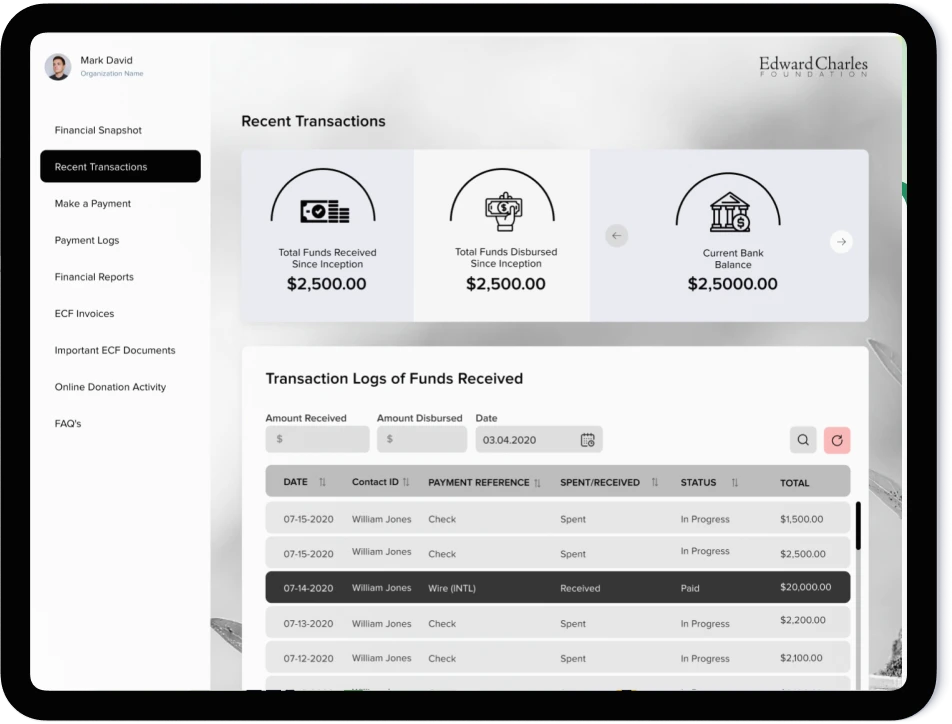

Increased in donor engagement and participation
More accurate donor insights for better targeting
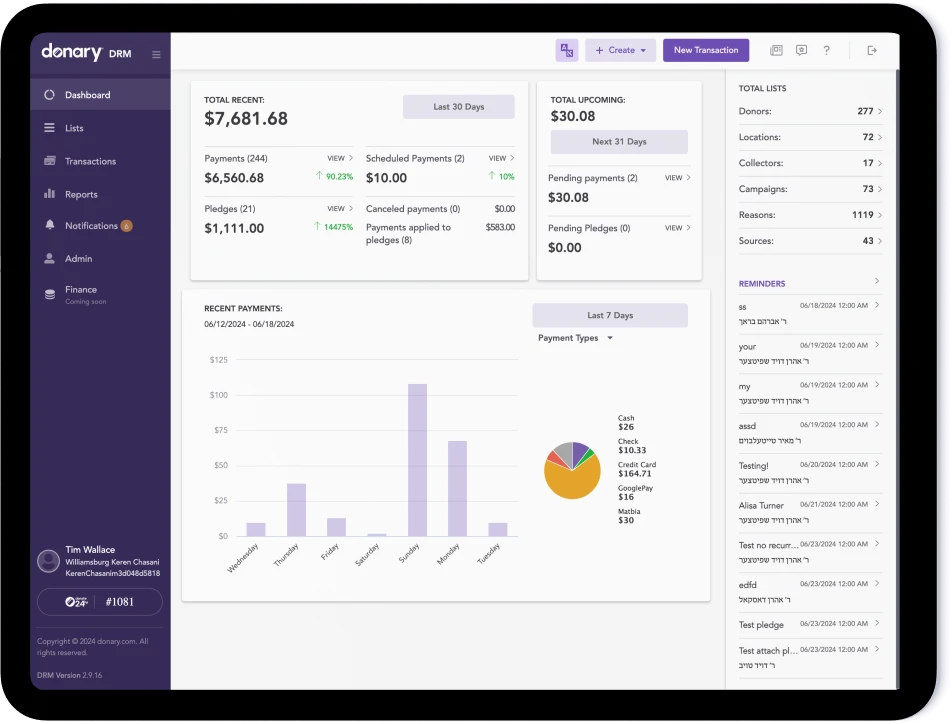

Improvement in Risk Assessment
Faster income verification process
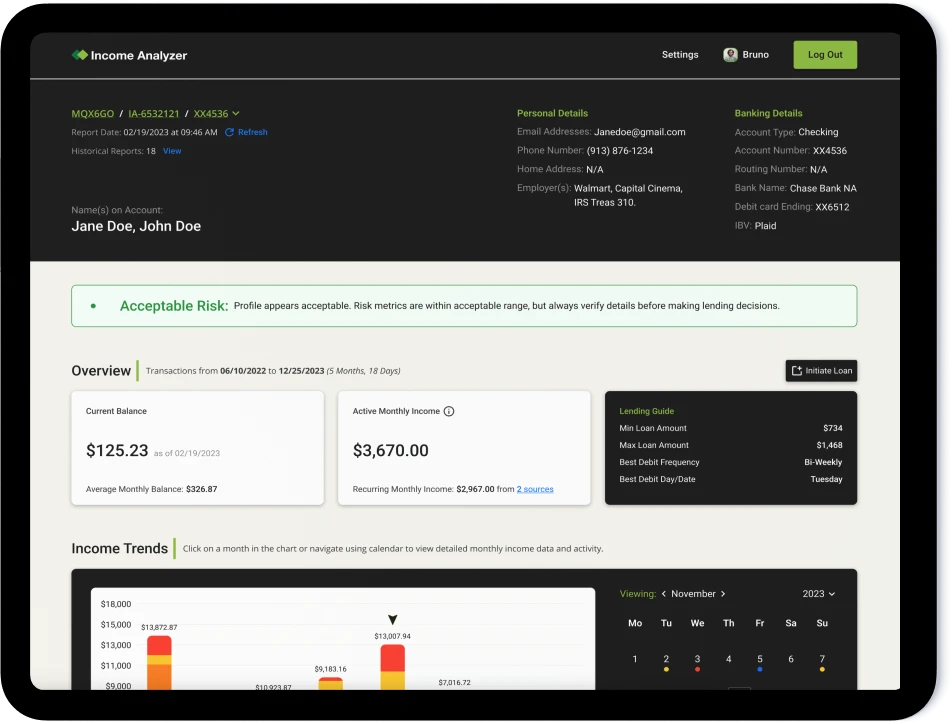

Success rate in global payment acceptance
Reduction in fraudulent transactions

AI credit scoring requires clarity across data inputs, model logic, and decision workflows as systems move from development to real-world lending environments. Our approach is designed to ensure accuracy, scalability, and trust while AI credit scoring solutions evolve and operate in production.
Dedicated oversight ensures that data pipelines, model performance, and credit decision outcomes remain aligned across the lifecycle.
Data sources, risk models, and dependencies are structured early to improve accuracy and reduce rework as machine learning credit scoring systems evolve.
AI credit scoring platforms are built for scalability, performance, and reliability, supporting real-time credit risk assessment and high-volume decisioning.
Model outputs, risk factors, and decision logic are clearly defined to support compliance, auditability, and stakeholder confidence.



CEO, Donary

Operations & Donor/Client Relations, Edward Charles Foundation


Owner, DMA Associates LLC


Director & Founder, Careless
CEO, Donary
Operations & Donor/Client Relations, Edward Charles Foundation
Owner, DMA Associates LLC
Director & Founder, Careless

Chief Executive Officer, NumaraPay
















A unified AI credit scoring platform that connects financial systems, data sources, and decision engines to enable accurate, real-time credit risk assessment and scalable lending operations.
Integrates customer profiles, transaction history, and account data to power reliable AI-powered credit scoring models.
Connects with loan origination system development workflows to automate application intake, evaluation, and approval processes.
Incorporates non-traditional datasets such as digital transactions, behavioral data, and financial activity for enhanced risk evaluation.
Integrates with KYC AML automation software to validate identities and ensure compliant credit decisioning.
Connects with risk engines and fraud monitoring workflow integration to strengthen credit risk assessment and prevent financial fraud.
Connects with credit bureaus to access credit history, repayment behavior, and external scoring data for stronger risk evaluation.
Browse answers to the most common questions about AI credit scoring software, alternative data usage, underwriting automation, and system scalability.
AI credit scoring uses machine learning and advanced data analysis to evaluate a borrower’s creditworthiness. It heps lenders make faster, more accurate, and more consistent decisions than traditional rule-based models.
AI credit scoring software analyzes financial, behavioral, transactional, and alternative data to identify risk patterns. It then generates a credit score or recommendation that supports underwriting and lending decisions.
AI-powered credit scoring improves decision speed, risk accuracy, and operational efficiency. It also helps lenders reduce manual review, expand borrower evaluation, and strengthen credit risk assessment.
Traditional credit scoring relies on fixed rules and limited credit history. AI credit scoring solutions use dynamic models, broader datasets, and predictive analytics to deliver more adaptive and data-driven outcomes.
Yes, alternative credit scoring software can use non-traditional data such as bank transactions, utility payments, digital behavior, and income patterns. This helps lenders assess applicants with limited or no formal credit history.
AI underwriting software automates parts of the credit evaluation process, including data analysis, risk segmentation, and decision support. This helps teams speed up approvals while maintaining consistency and control.
Yes, machine learning credit scoring is well suited for fintech software development because it supports scalability, automation, and faster digital lending workflows. It can also integrate with customer onboarding systems and loan platforms.
An AI credit scoring platform can integrate with core banking systems, customer onboarding systems, Loan Origination System Development workflows, KYC AML automation software], and fraud monitoring tools to support end-to-end decisioning.
Yes, AI credit scoring solutions are especially useful for thin-file borrowers because they can evaluate a wider range of signals beyond traditional bureau data. This supports more inclusive and flexible lending decisions.
AI Credit Scoring Software Development helps financial institutions build scalable, intelligent, and faster credit decision systems. It supports better risk modeling, improved underwriting efficiency, and stronger digital lending experiences.