Key Takeaways
- Software Types: Behavioral health software falls into clinical, admin, analytics, mobile, and AI categories.
- Right Fit Wins: The best platform is the one that matches care workflows, users, compliance, and scale.
- Telehealth Grows: Virtual behavioral care tools expand access, flexibility, and continuity for patients.
- Data Drives Care: Analytics and reporting systems help teams improve outcomes and operational decisions.
- Security Matters: Strong privacy, encryption, and compliance controls are essential in every platform.
- AI Needs Guard: AI can improve support and triage, but it must work with oversight and trust.
- Patient First: Engagement tools and mobile experiences help patients stay active in their care.
- Future Is Hybrid: Behavioral health platforms are moving toward hybrid, personalized, connected care.
Behavioral healthcare is changing fast, and much of that change is being driven by technology. Today, behavioral healthcare software plays a central role in how mental health services are delivered, managed, and scaled.
With more people seeking help for mental health conditions and expecting flexible, accessible care, traditional systems alone are no longer enough. Clinics, therapists, and healthcare startups are increasingly relying on digital tools to improve patient outcomes and streamline operations.
From teletherapy platforms to AI-driven analytics, modern software solutions are making behavioral healthcare more connected, personalized, and efficient. In this guide, we will walk through the different types of behavioral healthcare software systems, what they do, and how to choose the right one.
What is Behavioral Healthcare Software?
At its core, behavioral healthcare software refers to digital tools designed to support mental health services. This includes everything from therapy management systems to mobile apps that help patients track their mood or access care remotely.
These systems typically support:
- Mental health treatment (such as anxiety, depression, and stress disorders)
- Substance abuse and addiction recovery
- Therapy and counseling sessions
- Psychiatric evaluations and medication management
Who Uses These Systems?
- Therapists, psychologists, and psychiatrists
- Clinics and hospitals
- Telehealth providers
- Patients and caregivers
Why Different Types of Behavioral Healthcare Software Exist
-
Different Ways Care is Delivered
Some providers offer in-person sessions, others focus entirely on virtual care, and many now use a hybrid model. Each approach requires different software capabilities.
-
Unique Workflows in Mental Health
Unlike general healthcare, behavioral health involves ongoing therapy, progress tracking, and personalized treatment plans. These workflows require specialized systems.
-
Strict Compliance Requirements
Healthcare data is highly sensitive. Software must comply with regulations like HIPAA, which adds another layer of complexity to development and implementation.
-
Demand for Personalized and Remote Care
Patients today expect convenience. They want access to care through a mental health app, real-time communication, and tailored treatment experiences. This demand has fueled innovation in behavioral healthcare software development.
Core Categories of Behavioral Healthcare Software Systems
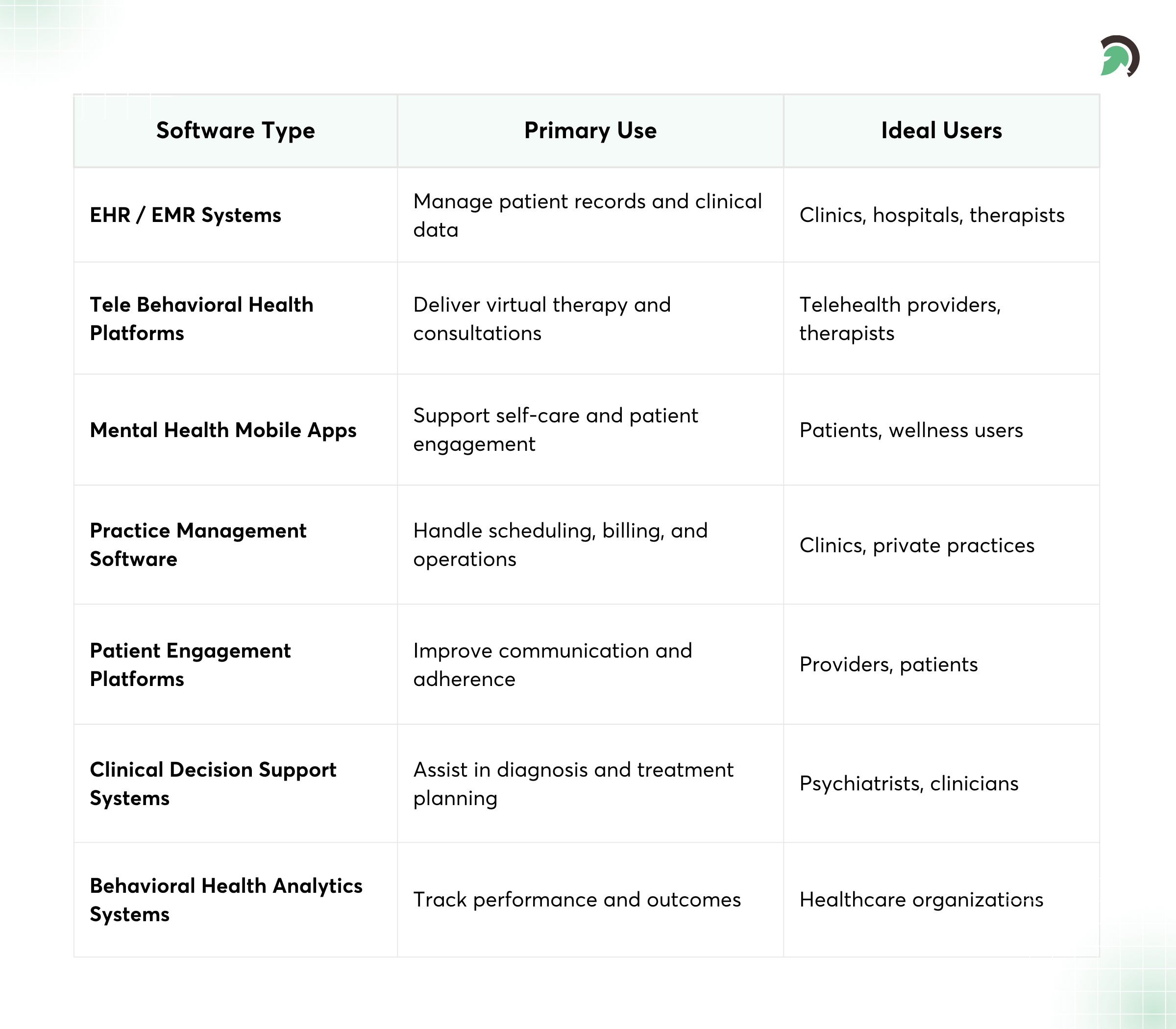
1. Electronic Health Record (EHR) / EMR Systems for Behavioral Health
EHR and EMR systems are the foundation of most healthcare environments. In behavioral health, they are adapted to handle therapy-specific data.
These systems serve as a central hub for storing and managing all patient information.
Key Features
Patient Records and History
- Detailed patient profiles
- Medical and behavioral history
- Medication tracking
Clinical Documentation
- Therapy notes and session summaries
- Treatment plans
- Progress tracking
Scheduling and Billing Integration
- Appointment scheduling
- Insurance claims
- Billing automation
2. Tele Behavioral Health Platforms
Telebehavioral health platforms allow providers to deliver care remotely. They have become a critical part of modern healthcare, especially after the shift toward virtual services.
These platforms make it easier for patients to access therapy without geographical limitations.
Key Features:
Video and Audio Sessions
- Secure video consultations
- One-on-one or group therapy
Appointment Scheduling
- Online booking systems
- Automated reminders
Secure Communication Channels
- Encrypted messaging
- File sharing
3. Mental Health Mobile Applications
Mental health apps are designed for patients. They help individuals manage their mental well-being outside of clinical settings.
These apps are not a replacement for therapy, but they are a powerful complement.
Key Features:
Mood Tracking and Journaling
- Daily mood logs
- Emotional pattern tracking
Self-Assessment Tools
- Mental health questionnaires
- Guided check-ins
Notifications and Reminders
- Medication reminders
- Therapy session alerts
4. Practice Management Software
Running a behavioral health practice involves more than just patient care. Administrative tasks can quickly become overwhelming.
That is where practice management tools come in, often referred to as mental health practice management software.
Key Features:
Appointment Scheduling
- Calendar management
- Automated bookings
Billing and Invoicing
- Claims processing
- Payment tracking
Staff Management
- Scheduling staff
- Resource allocation
5. Patient Engagement Platforms
Patient engagement is one of the most important aspects of successful treatment. If patients are not actively involved, outcomes suffer.
These platforms are designed to keep patients connected and engaged.
Key Features:
- Secure messaging between patients and providers
- Patient portals for accessing records
- Feedback and survey tools
6. Clinical Decision Support Systems (CDSS)
Clinical Decision Support Systems help providers make better decisions using data. These tools analyze patient information and provide recommendations based on evidence and patterns.
Key Features:
Data Analysis and Insights
- Real-time data evaluation
- Pattern detection
Treatment Recommendations
- Evidence-based suggestions
- Personalized guidance
Risk Alerts
- Early warning signs
- Behavioral risk indicators
7. Behavioral Health Analytics and Reporting Systems
Data plays a huge role in improving healthcare outcomes. Analytics platforms help organizations understand what is working and what is not.
Key Features:
Reporting Dashboards
- Visual data insights
- Performance tracking
Predictive Analytics
- Forecasting patient risks
- Identifying trends
Outcome Tracking
- Measuring treatment success
- Monitoring recovery
8. Substance Abuse and Addiction Management Software
Addiction treatment requires structured programs and close monitoring. This type of software is specifically designed to support those needs.
Key Features:
Treatment Tracking
- Recovery progress
- Therapy sessions
Compliance Monitoring
- Medication adherence
- Program participation
Reporting Tools
- Progress reports
- Compliance documentation
9. Remote Patient Monitoring (RPM) Systems
Remote monitoring allows providers to track patient behavior and health metrics outside of clinical settings. This approach enables early intervention and continuous care.
Key Features:
Wearable Integration
- Smart device connectivity
- Real-time health data
Real-Time Data Tracking
- Continuous monitoring
- Behavioral insights
Alerts and Notifications
- Immediate alerts for risks
- Provider notifications
10. AI-Powered Mental Health Platforms
AI is reshaping behavioral healthcare. These platforms use advanced algorithms to deliver smarter, more personalized care.
Key Features
Predictive Mental Health Insights
- Early detection of issues
- Risk prediction
Chatbots and Virtual Assistants
- 24/7 support
- Automated interactions
Personalized Therapy Recommendations
- Tailored treatment plans
- Adaptive therapy models
Key Features Across Behavioral Healthcare Systems
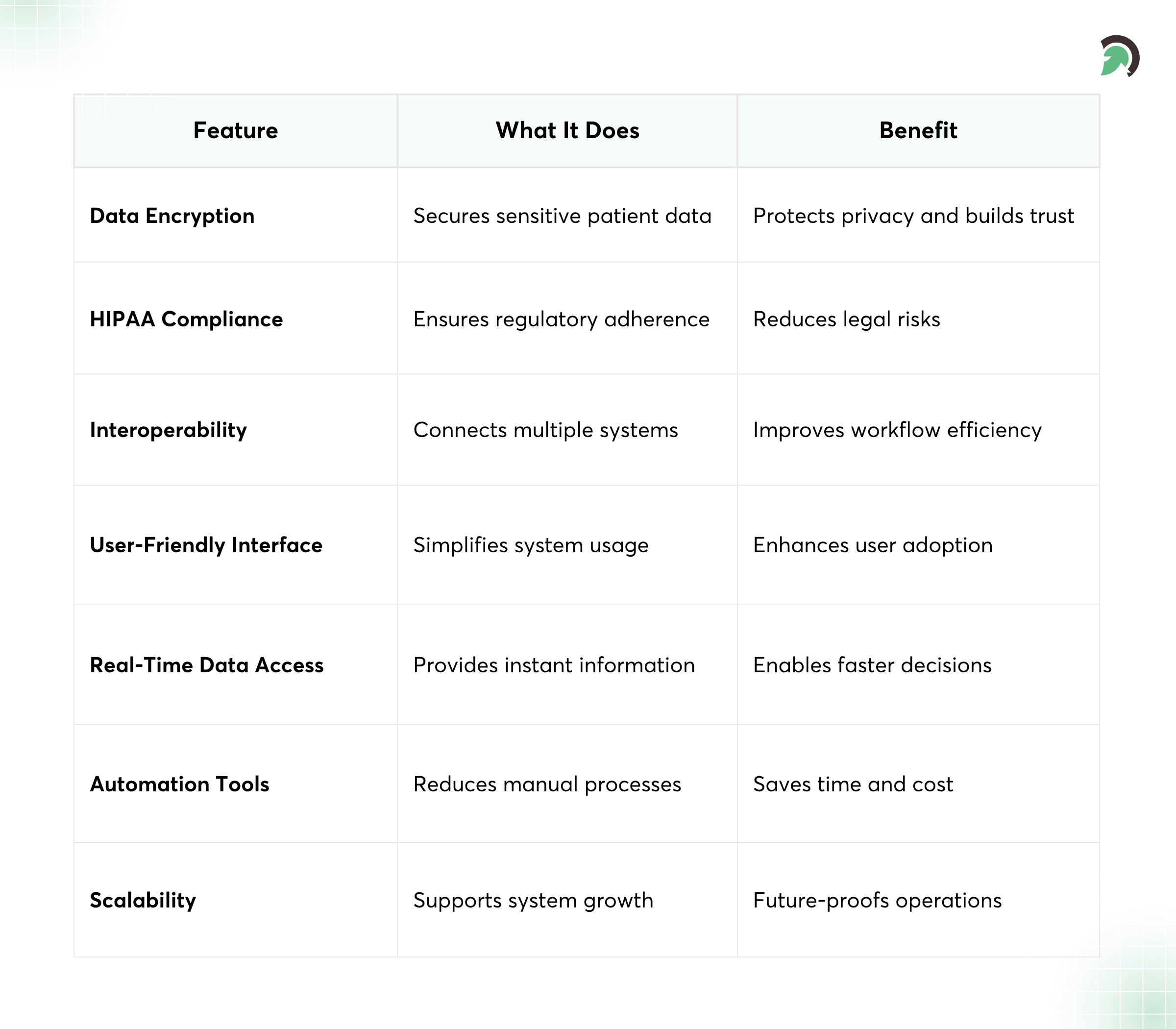
While each platform is built for a different purpose, most behavioral healthcare systems share a core set of features that make them practical, secure, and effective for both providers and patients.
-
Secure data management and encryption
Behavioral health platforms handle highly sensitive patient information, so strong encryption, controlled access, and secure data storage are essential for protecting privacy and building trust in the system.
-
HIPAA and compliance readiness
Compliance is not optional in behavioral healthcare. Software should be designed to support HIPAA requirements, secure communication, audit trails, and documentation standards that help organizations stay protected and prepared.
-
Interoperability with healthcare systems
A good platform should connect smoothly with EHRs, billing systems, labs, and telehealth tools, making it easier for providers to access complete information without switching between disconnected systems.
-
User-friendly interfaces
Even the most advanced software fails if people struggle to use it. Clear navigation, simple dashboards, and intuitive workflows help both patients and providers save time and avoid frustration.
-
Scalability for growing user bases
As practices expand, software should grow with them. A scalable system can support more patients, additional staff, new services, and higher data volumes without slowing down daily operations.
How to Choose the Right Behavioral Healthcare Software
There is no perfect solution for every organization. The right choice depends on your care model, operational needs, patient expectations, and long-term growth plans.
- Identify your specific use case: Start by defining what you need the software to do. Some organizations need stronger therapy tools, while others may prioritize billing, reporting, patient engagement, or remote care delivery.
- Consider patient and provider needs: The best software works well for everyone using it. Think about how clinicians, admin teams, and patients will interact with the platform and whether it supports their daily routines.
- Evaluate compliance requirements: Before making a decision, confirm that the platform supports your security, privacy, and regulatory obligations. This becomes even more important when handling remote care, digital records, and patient communication.
- Assess scalability and integration capabilities: Choose software that fits your current setup while supporting future growth. It should integrate with existing systems and remain flexible enough to adapt as your services expand.
- Choose between standalone and integrated platforms: Some organizations prefer standalone tools for specific functions, while others benefit more from an all-in-one system. The right option depends on your budget, workflow complexity, and long-term strategy.
Benefits of Using Behavioral Healthcare Software Systems
When implemented thoughtfully, behavioral healthcare software can improve both the patient experience and the way providers manage care, communication, and day-to-day operations.
- Improved patient care and outcomes: Better access to records, treatment plans, and progress tracking helps providers make informed decisions faster, leading to more personalized care and stronger long-term outcomes for patients.
- Increased accessibility to mental health services: Digital platforms make care easier to reach, especially for patients in remote areas or those who prefer virtual support, flexible scheduling, and communication outside traditional office visits.
- Streamlined workflows for providers: By automating scheduling, documentation, reminders, and billing tasks, the software reduces administrative pressure and gives providers more time to focus on care instead of repetitive manual work.
- Enhanced data-driven decision-making: With reporting tools and real-time insights, organizations can better understand patient trends, treatment effectiveness, and operational performance, making it easier to improve both care quality and efficiency.
- Reduced administrative burden: Behavioral healthcare software simplifies many time-consuming back-office tasks, enabling teams to work more efficiently, reduce errors, and maintain smoother operations across the organization.
Conclusion
As behavioral healthcare continues to evolve, the role of advanced digital solutions is becoming increasingly critical. From improving patient engagement to enabling data-driven decision-making, the right behavioral healthcare software systems can significantly enhance both clinical outcomes and operational efficiency. For providers and startups alike, choosing the right technology is no longer optional; it is a strategic necessity.
Looking ahead, innovations in AI, remote monitoring, and personalized care will further reshape the delivery of mental health services. Organizations that invest in scalable and future-ready platforms today will be better positioned to meet growing demand and deliver meaningful patient experiences.
If you are planning to build or upgrade your solution, partnering with an experienced behavioral healthcare software development company can make a measurable difference. At EvinceDev, we focus on creating secure, compliant, and user-centric healthcare solutions designed to support modern care delivery and long-term growth.