

Key Takeaways
- Traffic Turns Into Revenue: Ad networks help publishers earn from website visits through display, native, video, contextual, and programmatic ads.
- Fit Matters Most: The right ad network depends on traffic, niche, audience location, content quality, and revenue goals.
- Start With Simple Networks: Google AdSense, Media.net, and Infolinks are good options for beginners and small publishers.
- Scale With Optimization: Journey by Mediavine, Monumetric, Ezoic, and Publift help growing websites improve ad performance.
- Premium Sites Need More: Mediavine, Raptive, Amazon Publisher Services, Sovrn, Taboola, and Outbrain suit established publishers.
Getting traffic to a website is hard. Turning that traffic into steady revenue is even harder.
In 2026, publishers and bloggers have more monetization options than ever, from display ads and native ads to contextual, video, programmatic, and commerce-driven ad placements. But more options also mean more confusion. The ad network that works well for a small blog may not be the right fit for a high-traffic publisher, and the platform that delivers strong RPM for one niche may underperform for another.
That is why choosing the right ad partner matters. The best ad networks for publishers help turn website visits into revenue without damaging user experience, while the best ad networks for bloggers make it easier to monetize content based on traffic quality, niche, audience location, and growth stage.
This guide compares the top ad networks publishers and bloggers can consider in 2026, including who they are best for, what ad formats they support, and how to choose the right one for your website.
Also Read: Why Is Digital Marketing Important for Business Growth?What Are Ad Networks?
An ad network is a platform that connects advertisers with publishers who have space to show ads on their websites. Advertisers pay to display ads, while publishers earn revenue when visitors view, click, or interact with those ads.
For bloggers and website owners, ad networks simplify monetization. Instead of finding advertisers directly, publishers can join an ad network, place ad code on their website, and start showing relevant ads to visitors.
Ad networks usually manage advertiser demand, ad delivery, targeting, reporting, payments, and performance tracking. This makes them useful for publishers who want to earn from their content without building a direct sales team.
Quick Stat:
According to IAB/PwC, U.S. internet advertising revenue reached $294.6 billion in 2025, growing 13.9% year over year.
How Do Ad Networks Work?
Ad networks act as a bridge between advertisers and publishers. Advertisers want to promote their products or services, while publishers want to earn revenue from their website traffic. The ad network connects both sides and manages ad delivery, targeting, tracking, and payments.
Here is how the process usually works:
- Advertisers Create Campaigns: Advertisers set their campaign goals, budget, target audience, ad format, and bidding preferences.
- Publishers Join the Ad Network: Bloggers and website owners apply to the ad network. The platform may review the website’s content, traffic, niche, and policy compliance before approval.
- Publishers Add Ad Code: After approval, publishers place the ad code on their website in areas such as blog posts, sidebars, headers, or footers.
- Ads Are Matched and Displayed: When a visitor opens the website, the ad network selects a relevant ad based on page content, user behavior, location, device, and advertiser demand.
- Publishers Earn Revenue: Publishers earn through models such as CPM, CPC, or CPA, depending on whether ads are viewed, clicked, or lead to a specific action.
- Performance Is Tracked: Publishers can monitor impressions, clicks, RPM, CTR, and earnings through the ad network dashboard and optimize placements over time.
How Do Ad Networks Help Publishers and Bloggers Monetize Websites?
Ad networks help publishers turn website traffic into revenue. They provide access to advertisers, ad formats, and monetization tools that may be difficult to manage independently.
A publisher can use a display ads platform to show banner, responsive, in-content, or native ads across blog pages. Some platforms also support video ads, push ads, contextual ads, affiliate-style ads, and sponsored content recommendations.
For bloggers, ad networks are useful because they allow content to generate income even when the blogger is not directly selling a product or service. A well-monetized blog can earn from impressions, clicks, engagement, or conversions.
However, the best ad network is not only about high RPM. It should also match the website’s audience, content quality, niche, traffic level, page speed goals, and user experience expectations.
Also Read: What Are Full-Service Digital Marketing Services?Quick Stat:
According to DataReportal’s Digital 2026 Global Overview Report, more than 6 billion people now use the internet, representing 73.2% of the world’s population.
The Top 15 Best Ad Networks for Publishers & Bloggers in 2026
The best ad networks for publishers offer different strengths. Some are easy to start with, some focus on premium ad management, and some are better for large publishers with high traffic. Below is a detailed look at the best ad networks for bloggers and publishers in 2026.
1. Google AdSense
Best for: Beginners, small publishers, and new bloggers
Google AdSense is one of the most popular ad networks for website monetization. It is often the first choice for new bloggers because the setup is simple and the platform works with many types of websites. Google positions AdSense as a way for publishers to earn money from website and content monetization.
AdSense allows publishers to place ad code on their website and display relevant ads based on content, audience, and advertiser demand. It supports formats such as display ads, responsive ads, native-style ads, and in-article ads.
Key features:
- Easy setup for beginners
- Access to large advertiser demand
- Responsive ad formats
- Works with different website categories
- Simple reporting dashboard
Good fit for: New bloggers, small websites, and publishers starting monetization.
Things to consider: AdSense is easy to start with, but earnings may be lower compared to premium managed networks once traffic grows.
2. Media.net
Best for: Contextual ads and content-heavy websites
Media.net is a strong option for publishers that want contextual advertising. Instead of showing ads randomly, contextual ads are matched with the topic of the page. This makes Media.net useful for blogs where content intent is clear.
It can work well for niches such as finance, business, education, technology, software, travel, and product-focused content. For bloggers who want an alternative to AdSense, Media.net is often considered a reliable display ad network.

Media.net contextual ad network for bloggers and content-focused website publishers
Key features:
- Contextual ad targeting
- Native and display ad formats
- Good for niche content websites
- Suitable for text-heavy blogs
- Useful AdSense alternative
Good fit for: Informational blogs, niche publishers, and websites with high-quality written content.
Things to consider: Performance depends heavily on niche, audience location, and advertiser relevance.
3. Journey by Mediavine
Best for: Growing bloggers
Journey by Mediavine is designed for growing publishers who are not yet ready for full Mediavine. It gives smaller bloggers a managed monetization path while they continue building traffic and content quality. Mediavine states that Journey starts at 1,000 sessions, while full Mediavine is positioned for publishers with stronger revenue levels.

Journey by Mediavine ad network for growing bloggers seeking managed website monetization
This makes Journey useful for bloggers who want to move beyond basic ad monetization but are not yet eligible for premium networks.
Key features:
- Built for growing websites
- Managed ad monetization
- Good step before full Mediavine
- Designed for content creators
- Helps bloggers improve revenue potential
Good fit for: Smaller blogs with original content and early traffic growth.
Things to consider: Approval still depends on content quality, traffic, and platform requirements.
4. Mediavine
Best for: Established niche blogs
Mediavine is one of the best ad networks for bloggers who already have quality content, consistent traffic, and engaged readers. It is known for managed ad operations, publisher support, and a strong focus on long-term revenue.
Mediavine says full Mediavine is built for publishers who prioritize quality and long-term revenue, with current eligibility tied to $5,000+ in annual ad revenue.
Key features:
- Managed display advertising
- Video monetization options
- Programmatic ad demand
- Publisher-focused support
- Strong fit for lifestyle, food, travel, parenting, and niche blogs
Good fit for: Established bloggers with quality content and growing revenue.
Things to consider: It is not usually the first step for a brand-new website.
5. Raptive
Best for: Premium publishers and high-traffic creators
Raptive is a premium ad management platform for publishers with strong content, high-quality traffic, and established audiences. It works well for authority blogs, creator-led websites, and professional publishers looking for stronger monetization support.
Raptive lists 25,000 monthly pageviews as a minimum requirement, along with other eligibility factors related to traffic and content quality.

Raptive ad management platform for premium publishers and high-traffic content websites
Key features:
- Premium advertiser demand
- Managed ad optimization
- Display and video monetization
- Strong support for creators
- Revenue and audience growth tools
Good fit for: Authority blogs, high-traffic publishers, and premium content websites.
Things to consider: Eligibility standards are higher than beginner ad networks.
6. Ezoic
Best for: Larger websites focused on optimization
Ezoic is often used by publishers who want to test ad layouts, placements, and monetization strategies. It is suitable for websites that want more control over optimization than basic ad platforms provide.
Ezoic focuses on ad testing, revenue analytics, and user experience optimization. For publishers with enough traffic and content depth, it can help identify which ad placements perform better.
Key features:
- Ad layout testing
- Display and video monetization
- Revenue analytics
- User experience optimization
- Tools for performance testing
Good fit for: Larger blogs and publishers focused on improving ad performance.
Things to consider: Publishers should monitor page speed, layout quality, and user experience carefully.
Quick Stat:
According to EMARKETER, U.S. programmatic digital display ad spending is projected to exceed $180 billion in 2025, representing about 92% of total digital display ad spending.
7. Monumetric
Best for: Mid-sized publishers
Monumetric is a managed ad network for publishers who want more support than self-service platforms. It can be useful for bloggers who have outgrown beginner ad networks but may not yet be ready for larger premium platforms.
Monumetric focuses on managed display ads, ad setup, optimization, and publisher support. It is a strong option for website owners who want help improving ad revenue without handling everything manually.
Key features:
- Managed ad operations
- Display ad monetization
- Publisher support
- Ad placement optimization
- Better support than basic platforms
Good fit for: Mid-sized bloggers and niche publishers.
Things to consider: Publishers should check traffic requirements, setup terms, and payment details before applying.
8. Publift
Best for: Programmatic revenue optimization
Publift is a managed programmatic ad platform that helps publishers improve ad revenue through optimization, technology, and expert support. It is better suited for publishers who are ready to move beyond basic ad networks.
Publift can support display ads, video ads, header bidding, and programmatic demand. It is useful for publishers who need a more advanced monetization partner.
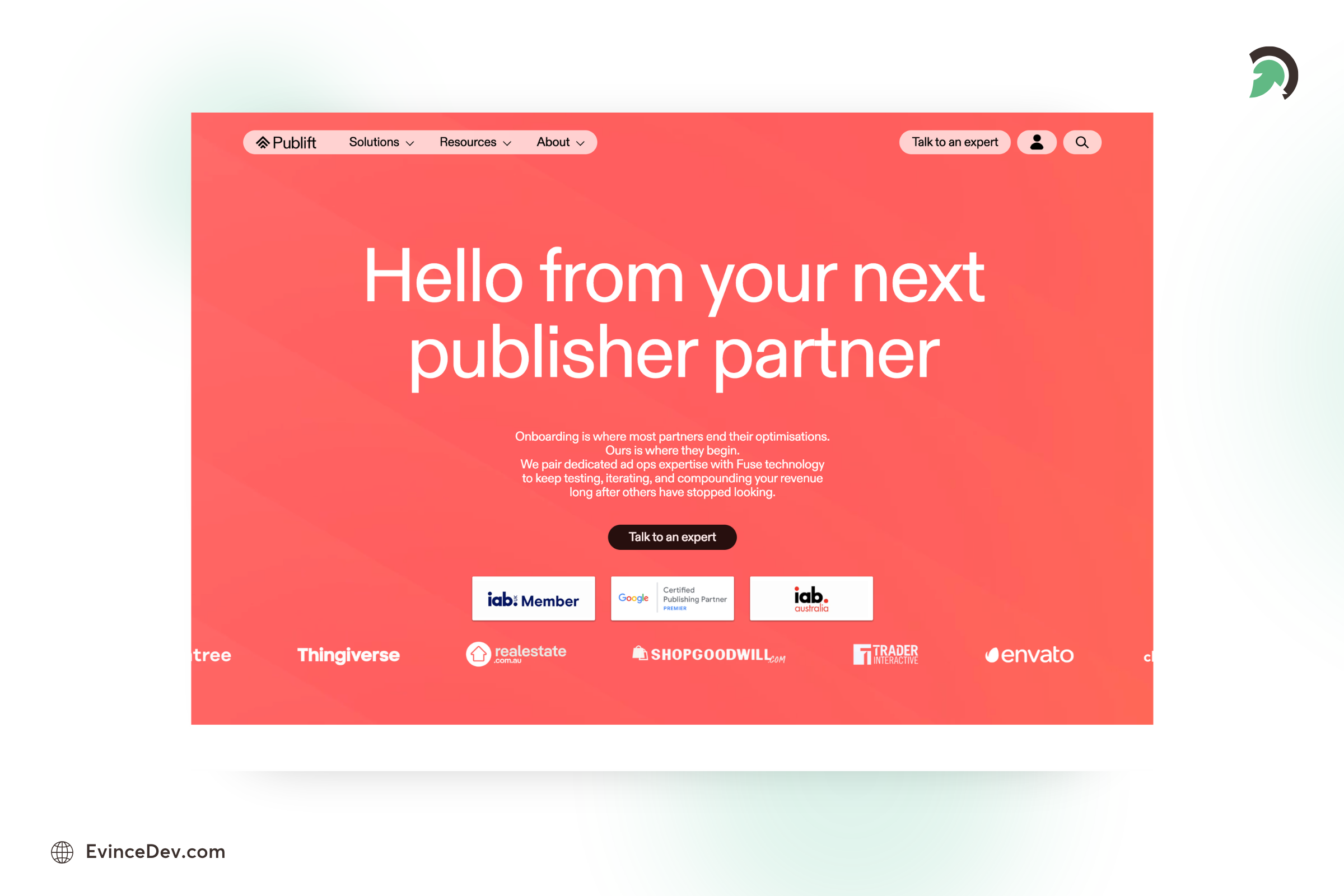
Publift programmatic advertising platform for publishers improving display and video ad revenue
Key features:
- Programmatic ad monetization
- Header bidding support
- Display and video ads
- Revenue optimization
- Managed publisher support
Good fit for: Growing publishers that want expert ad optimization.
Things to consider: It is more suitable for publishers with meaningful traffic and revenue potential.
9. Amazon Publisher Services
Best for: Large publishers and commerce-driven websites
Amazon Publisher Services provides solutions for web publishers to help increase revenue and improve user experience. It is best suited for larger publishers, media companies, and commerce-led websites that want access to programmatic demand and advanced ad technology.
It can be especially useful for publishers with product-focused content, review pages, shopping guides, or strong commerce intent.
Key features:
- Programmatic advertising solutions
- Access to Amazon demand
- Useful for commerce-focused publishers
- Advanced ad technology
- Support for larger web publishers
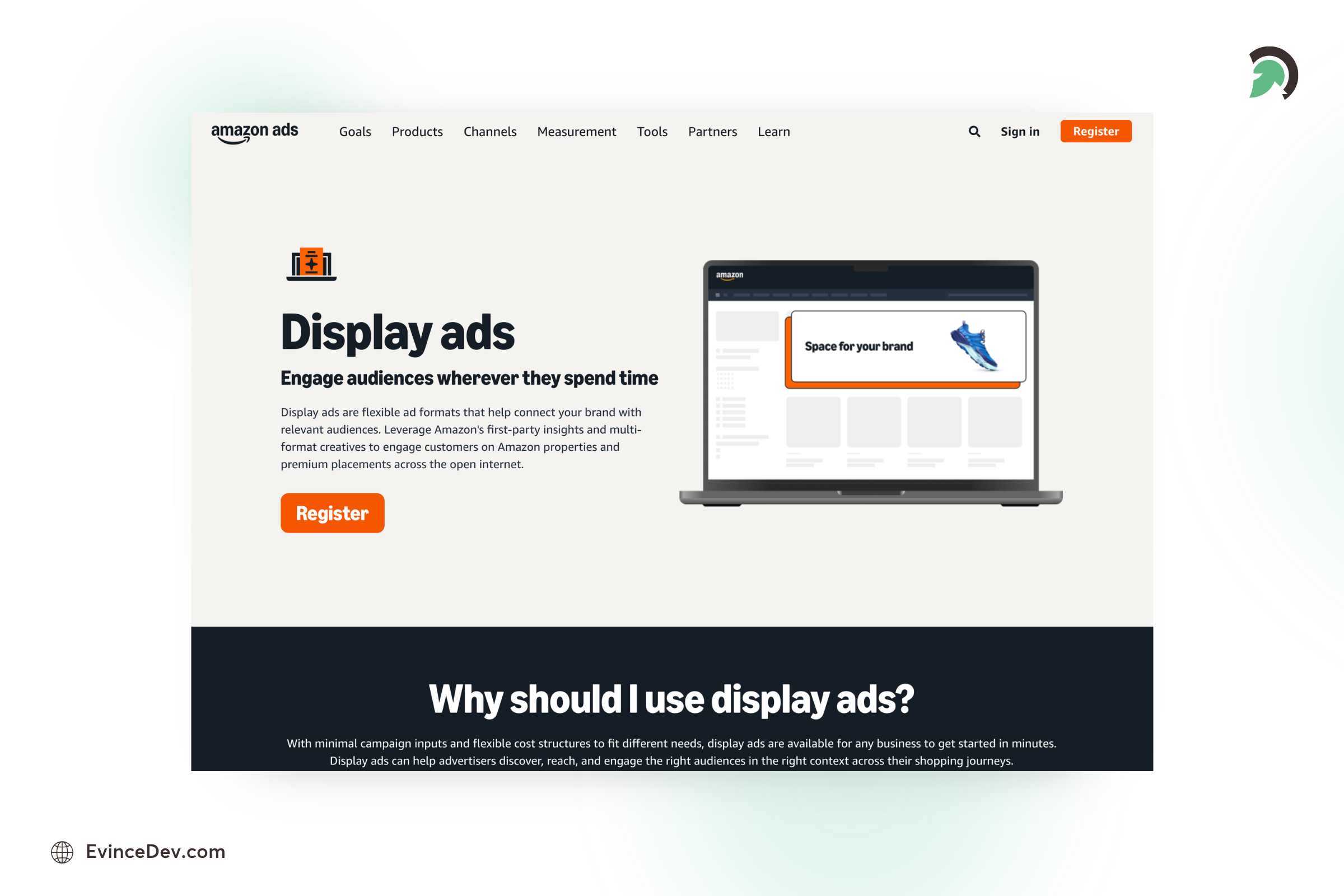
Amazon Publisher Services programmatic ad platform for large publishers and commerce websites
Good fit for: Enterprise publishers, commerce websites, and large content platforms.
Things to consider: It is not typically the best starting point for small blogs.
10. PropellerAds
Best for: High-volume global traffic websites
PropellerAds is known for alternative ad formats such as push ads, popunder ads, interstitial ads, and other high-visibility placements. It can be useful for publishers with large global traffic or websites that want monetization options beyond traditional display ads.
It may work well for entertainment, downloads, utilities, gaming, streaming-related, or high-volume content categories.
Key features:
- Push notification ads
- Popunder ads
- Interstitial ads
- Global advertiser demand
- Multiple monetization formats
Good fit for: Publishers with high-volume traffic and global audiences.
Things to consider: Some formats may feel intrusive, so publishers should balance revenue with user experience.
11. Adsterra
Best for: Flexible monetization and global traffic
Adsterra is another alternative ad network that offers different ad formats for publishers. It supports display ads, native banners, popunders, social bar ads, and other flexible formats.
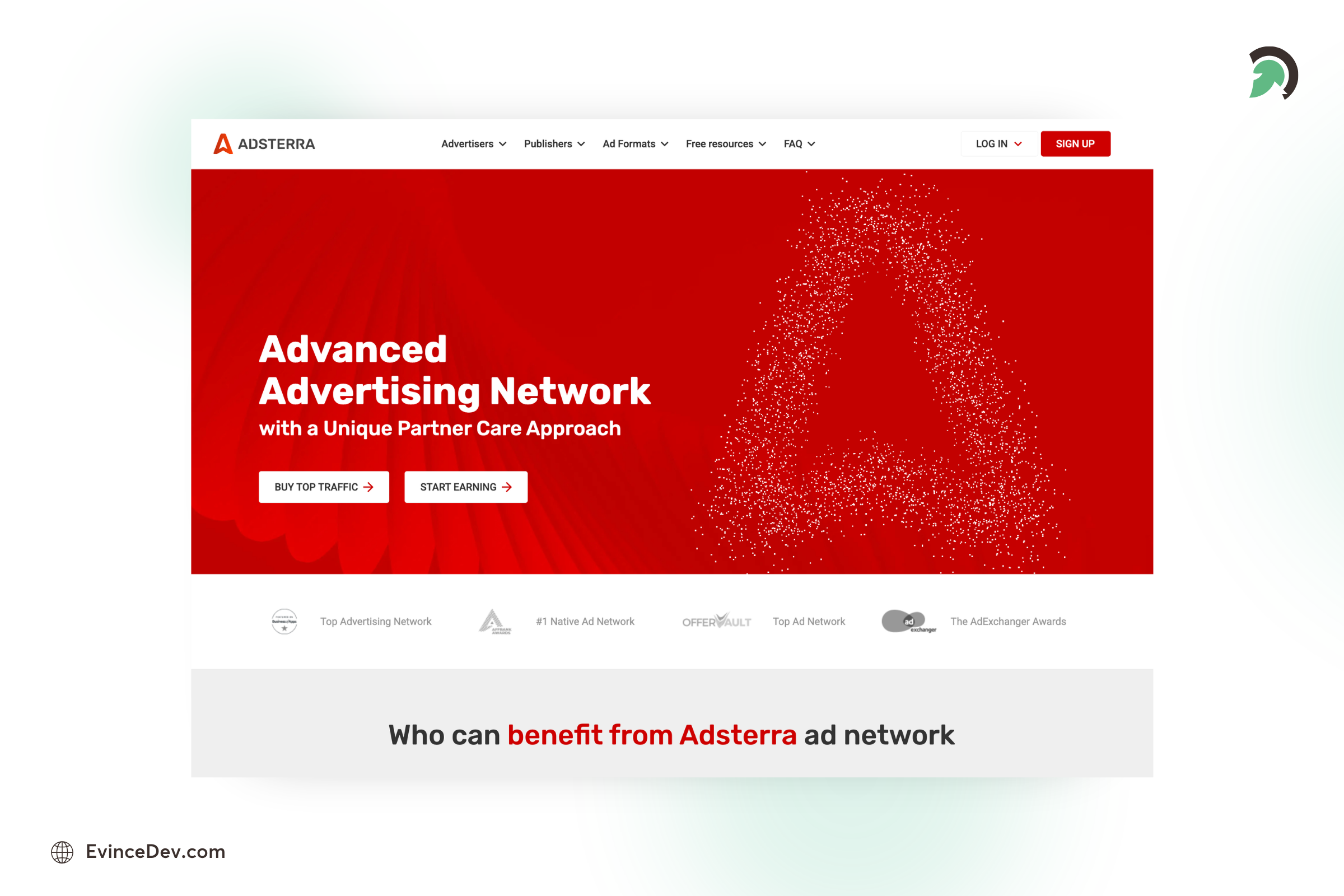
Adsterra advertising network for publishers using display, native, popunder, and social bar ads
For publishers that do not fit strict premium network requirements, Adsterra can offer broader monetization opportunities across different geographies and traffic types.
Key features:
- Multiple ad formats
- Global advertiser demand
- Popunder and social bar ads
- Native banners
- Flexible monetization options
Good fit for: Publishers looking for alternative ad formats and global traffic monetization.
Things to consider: Ad quality and user experience should be reviewed carefully.
12. Taboola
Best for: Native advertising
Taboola is one of the top advertising networks for native content recommendations. It is commonly used by publishers that want to monetize through sponsored articles, recommendation widgets, and content discovery placements.

Taboola native advertising network for blogs, news websites, and editorial publishers
Native ads can blend with editorial content and encourage users to click related sponsored stories or product recommendations.
Key features:
- Native recommendation ads
- Sponsored content placements
- Strong fit for editorial websites
- Useful for content discovery
- Scalable monetization for content publishers
Good fit for: Blogs, news websites, media publishers, and editorial content platforms.
Things to consider: Native ad quality and relevance should be monitored to protect reader trust.
13. Infolinks
Best for: In-text monetization
Infolinks is useful for those bloggers who want to monetize text heavy pages without relying on traditional banner placements. It offers formats such as in-text ads, in-frame ads, as well as in-article ads.
For blogs with long form of content, tutorials, guides, and informational articles, Infolinks can create additional revenue opportunities inside the reading experience.
Key features:
- In-text ads
- In-article ads
- Simple setup
- Non-traditional ad placements
- Useful for content-heavy websites
Good fit for: Text-heavy blogs and small publishers.
Things to consider: In-text ads should be used carefully so they do not distract readers.
14. Sovrn
Best for: Display, affiliate, and commerce monetization
Sovrn is useful for publishers that want to combine advertising with commerce focused monetization. It can support display advertising, affiliate-style revenue, and product-driven content monetization.
For websites with buying guides, product reviews, comparison articles, and shopping-related content, Sovrn can really be handy in monetizing purchase intent.
Key features:
- Display ads
- Commerce monetization
- Affiliate-style revenue options
- Useful for product content
- Supports multiple monetization paths
Good fit for: Review websites, product blogs, and commerce-focused publishers.
Things to consider: It may perform best when the site has strong commercial intent.
15. Outbrain
Best for: Premium native ad monetization
Outbrain is a native advertising platform that helps publishers monetize via the sponsored recommendations as well as content discovery placements. It is often used by media companies, editorial websites, and publishers with strong content depth.
Outbrain is helpful for publishers because it shows sponsored content recommendations that actually match the style of the editorial pages.
Key features:
- Native recommendation ads
- Sponsored content widgets
- Premium advertiser demand
- Strong fit for editorial content
- Useful for large content websites
Good fit for: Media websites, blogs, and editorial publishers.
Things to consider: Like Taboola, native ad relevance and content quality should be monitored.
Quick Comparison Table of Best Ad Networks for Publishers & Bloggers in 2026
| Ad Network | Traffic Requirement | Best For | Main Ad Types | Ideal Publisher Type |
| Google AdSense | No fixed public traffic minimum | Beginners and small publishers | Display, text, native, responsive ads | New bloggers and small websites |
| Media.net | No fixed public traffic minimum, curated approval | Contextual advertising | Contextual, display, native ads | Content-heavy blogs and niche websites |
| Journey by Mediavine | Starts at 1,000 sessions | Growing bloggers | Managed display ads | Smaller blogs ready to move beyond basic ads |
| Mediavine | $5,000+ annual ad revenue eligibility | Established niche blogs | Display, video, programmatic ads | High-quality blogs with engaged audiences |
| Raptive | 25,000 monthly pageviews | Premium publishers | Display, video, programmatic ads | High-traffic blogs and authority websites |
| Ezoic | Requirement varies by site/program | Larger websites | Display, video, programmatic ads | Publishers focused on testing and optimization |
| Monumetric | Commonly listed at 10,000 monthly pageviews | Mid-sized publishers | Managed display ads | Bloggers wanting ad management support |
| Publift | Best suited for larger publishers, often $2K+ monthly ad revenue | Revenue optimization | Programmatic, display, video ads | Publishers needing managed monetization |
| Amazon Publisher Services | Best suited for large publishers | Large publishers and commerce sites | Programmatic and display ads | Enterprise publishers and commerce-led websites |
| PropellerAds | No fixed public traffic minimum | High-volume traffic websites | Push, popunder, interstitial, display ads | Publishers with global or mixed traffic |
| Adsterra | Flexible approval, no strict minimum in many cases | Alternative monetization | Display, popunder, social bar, native ads | Publishers needing flexible ad formats |
| Taboola | Best suited for high-traffic publishers | Native advertising | Native recommendation ads | Blogs, news sites, and content publishers |
| Infolinks | No fixed public traffic minimum | In-text monetization | In-text, in-frame, in-article ads | Bloggers with text-heavy content |
| Sovrn | Varies by product and publisher type | Display and commerce monetization | Display, affiliate, commerce ads | Publishers combining ads and affiliate revenue |
| Outbrain | Best suited for established publishers | Premium native ads | Native recommendation ads | Editorial websites and media publishers |
How to Choose the Right Ad Network
Choosing from the best ad networks for bloggers is easier when you start with your website stage. For example, a beginner blog should focus on simple setup, easy approval, and clean ad formats. A growing blog should always look for better optimization, support, and RPM improvement. A large publisher should focus on premium demand, programmatic revenue, and advanced reporting.
Before applying, check the network’s traffic requirements, niche fit, payout terms, ad formats, page speed impact, as well as, control over ad placements. A banner ad network may work well for simple display monetization, while native ad networks may be better for editorial content and media-style websites.
The best approach is to test eveyrthing carefully. Avoid filling every page with ads too early. Too many intrusive ads can hurt user experience, reduce engagement, and damage long-term search performance. The best ad networks for publishers should help increase revenue without making the website feel difficult to read or navigate.
Best Ad Networks by Publisher Type
Different publishers need different monetization partners. The best ad networks for publishers should be selected based on website stage, content type, and audience behavior.
| Publisher Type | Recommended Ad Networks |
| New bloggers | Google AdSense, Media.net, Infolinks |
| Growing bloggers | Journey by Mediavine, Monumetric, Ezoic |
| Established niche publishers | Mediavine, Raptive, Publift |
| Large publishers | Amazon Publisher Services, Raptive, Sovrn |
| Content-heavy blogs | Media.net, Taboola, Outbrain |
| Commerce-focused websites | Sovrn, Amazon Publisher Services, Media.net |
| High-volume global traffic websites | PropellerAds, Adsterra |
| Native ad monetization | Taboola, Outbrain |
For new sites, Google AdSense and Media.net are among the best ad networks for small publishers because they are easier to start with than premium managed platforms. For scaling websites, Journey by Mediavine, Monumetric, and Ezoic can help improve revenue structure. For established publishers, Mediavine, Raptive, Publift, Amazon Publisher Services, Sovrn, Taboola, and Outbrain offer more advanced monetization options.
Conclusion
There is no single ad network that is suitable for every publisher. A beginner blog, niche website, large media platform, and commerce-focused site all have different monetization needs.
New bloggers can start with Google AdSense, Media.net, and Infolinks. Growing bloggers can explore Journey by Mediavine, Monumetric, and Ezoic, while established publishers can consider Mediavine, Raptive, Publift, Amazon Publisher Services, Sovrn, Taboola, and Outbrain for advanced revenue growth.
In 2026, successful website monetization is not just about adding ads, in fact, it is more about choosing the right ad partner and building the revenue model that can scale as your website grows. Working with an experienced digital marketing agency can also help publishers improve traffic quality, ad placement, audience targeting, and overall monetization performance.