
Key Takeaways:
- Market Demand: Behavioral healthcare apps are growing fast as demand rises for accessible and digital mental health support.
- Core Features: Teletherapy, mood tracking, reminders, and secure messaging are key features users expect in these apps.
- User Experience: A calm, simple, and supportive design improves engagement and helps users stay active for longer.
- Data Security: Strong privacy controls and secure data handling are essential for trust in behavioral healthcare apps.
- HIPAA Readiness: Compliance with HIPAA and similar regulations is crucial when handling patient data and care workflows.
- Tech Stack: Choosing the right tech stack supports app performance, scalability, security, and future integrations.
- Dev Challenges: Building these apps involves challenges like retention, system integration, and clinical reliability.
In recent years, the importance of mental and emotional well-being has moved from the sidelines to the center of global healthcare conversations. Rising cases of anxiety, depression, burnout, and substance abuse have created an urgent need for accessible and scalable solutions. Traditional healthcare systems, already under pressure, often struggle to meet this growing demand. This is where Behavioral Healthcare App Development is making a transformative impact.
Mobile and web-based behavioral health applications are bridging the gap between patients and care providers by offering real-time support, remote therapy, and personalized mental health tools. From teletherapy platforms to mood tracking apps, digital solutions are redefining how care is delivered and experienced.
As technology continues to evolve, businesses and healthcare providers are increasingly investing in healthcare app development to create solutions that are not only accessible but also secure, compliant, and user-friendly.
In this blog, we’ll explore everything you need to know about building a behavioral healthcare app, including features, technologies, compliance requirements, challenges, and future trends.
Market Insight:
According to Towards Healthcare, the global digital behavioral health market is projected to grow from $33.1 billion in 2025 to $153.85 billion by 2034, at a CAGR of 18.6%, driven by increasing awareness, remote care adoption, and technological advancements.
What Is Behavioral Healthcare?
Behavioral healthcare focuses on the connection between behaviors, emotions, and overall mental well-being. It includes the diagnosis, prevention, and treatment of mental health conditions, substance abuse, and emotional disorders.
While often used interchangeably with mental health, behavioral healthcare is broader. It emphasizes how habits, lifestyle choices, and psychological patterns influence health outcomes.
A Behavioral Healthcare App typically goes beyond simple meditation or wellness tracking. It often includes structured care components such as therapy sessions, treatment plans, and clinical monitoring.
Key categories include:
- Therapy and counseling platforms
- Cognitive Behavioral Therapy (CBT) apps
- Mood and habit tracking tools
- Addiction recovery apps
- Crisis intervention platforms
Unlike generic wellness apps, these solutions are often designed with clinical input and require strict compliance with healthcare regulations.
Quick Stat:
According to Fortune Business Insights, around 280 million people worldwide suffer from depression, making it one of the most widespread mental health conditions today.
Market Trends and Growth
The digital mental health market is experiencing rapid growth, driven by several key factors.
- Increasing Mental Health Awareness: People are more open about discussing mental health than ever before. This has led to higher demand for accessible and stigma-free care options.
- Rise of Remote Care: The pandemic accelerated the adoption of remote healthcare. Today, teletherapy and virtual consultations are widely accepted, making Telehealth app development a crucial part of modern healthcare strategies.
- Shortage of Professionals: Many regions face a shortage of licensed therapists and counselors. Digital platforms help scale access by connecting patients with providers across locations.
- Technological Advancements: AI, machine learning, and wearable integrations are enabling personalized and data-driven care experiences.
Emerging Trends:
- AI-powered mental health assistants
- Predictive analytics for early intervention
- Integration with wearables (sleep, activity tracking)
- Gamification for engagement and retention
These trends are shaping the future of Behavioral Healthcare App Development, making it more intelligent, responsive, and user-centric.
Quick Stat:
According to DataM Intelligence, over 60% of people with mental health conditions do not receive treatment, often due to lack of access, stigma, or cost barriers.
Types of Behavioral Healthcare Apps
Understanding the different types of apps is essential before starting development.
1. Teletherapy Apps
These apps enable users to connect with licensed therapists through video, audio, or chat.
Key features:
- Appointment booking
- Secure video consultations
- Messaging with therapists
Examples include BetterHelp and Talkspace.
2. Self-Help and CBT Apps
These apps provide guided exercises based on Cognitive Behavioral Therapy techniques.
Features include:
- Thought tracking
- Behavioral exercises
- Guided sessions
These are popular in mental health app development for users who prefer self-guided care.
3. Mood and Habit Tracking Apps
These apps help users monitor their emotional patterns and daily habits.
Core functions:
- Mood logging
- Data visualization
- Behavioral insights
4. Addiction Recovery Apps
Designed to support users recovering from substance abuse.
Features:
- Sobriety tracking
- Community support groups
- Motivational content
5. Crisis Support Apps
These provide immediate assistance during emergencies.
Key capabilities:
- Instant chat support
- Emergency contact access
- Location-based help

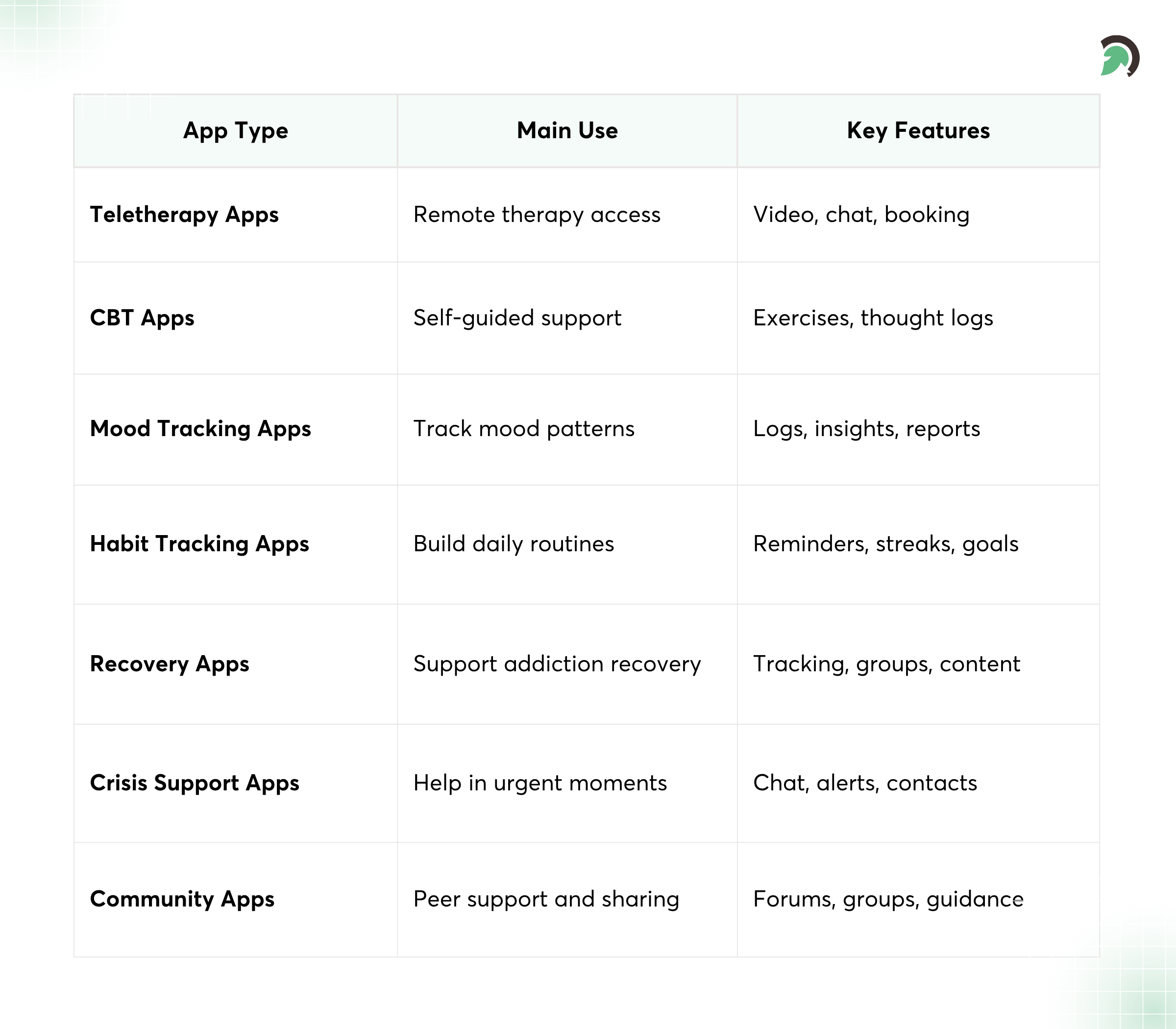
Each of these categories requires a tailored approach to Behavioral healthcare mobile app development, depending on user needs and clinical requirements.
Must-Have Features of a Behavioral Healthcare App
A successful app must balance functionality, usability, and compliance.
Core Features
- User Registration and Profiles
Secure onboarding with role-based access (patients, therapists, admins). - Therapist Matching System
Smart algorithms to connect users with suitable professionals. - Appointment Scheduling
Calendar integration with reminders and notifications. - Communication Tools
Secure chat, audio, and video consultations. - Progress Tracking
Journals, mood logs, and therapy progress reports.
Advanced Features
- AI Chatbots
Provide immediate, non-clinical support and guidance. - Mood Analytics Dashboard
Visual insights into emotional trends and patterns. - Push Notifications
Reminders for medication, therapy sessions, and activities. - Community Forums
Peer support groups for shared experiences. - Wearable Integration
Track sleep, activity, and stress indicators.
When building these features, partnering with experts in Behavioral Healthcare App Development Services ensures scalability, security, and clinical alignment.
UX/UI Considerations
Design plays a critical role in behavioral healthcare apps. Users often interact with these platforms during vulnerable moments, so the experience must be intuitive and comforting.
Key Design Principles
- Empathy-Driven Design
Use calming colors, simple layouts, and reassuring language. - Accessibility
Ensure usability for all age groups and abilities. - Minimal Cognitive Load
Avoid overwhelming users with too many options. - Privacy-Focused Interface
Clearly communicate data usage and security measures.
A well-designed interface can significantly improve user engagement and retention, which is essential for long-term success.
Technology Stack for Development
Choosing the right technology stack is crucial for performance, scalability, and compliance.
Frontend Development
- React Native or Flutter for cross-platform apps
- Swift (iOS) and Kotlin (Android) for native apps
Backend Development
- Node.js or Django for scalable backend systems
- Firebase for real-time database and authentication
Video and Communication APIs
- WebRTC
- Twilio
AI and Machine Learning
- Natural language processing for chatbots
- Recommendation engines for personalized care
Cloud Infrastructure
- AWS, Azure, or Google Cloud with healthcare compliance support
Database
- Secure and encrypted storage solutions
A reliable tech stack is essential for delivering high-quality healthcare app development solutions.
Why Are Compliance and Security Critical in Behavioral Healthcare Apps?
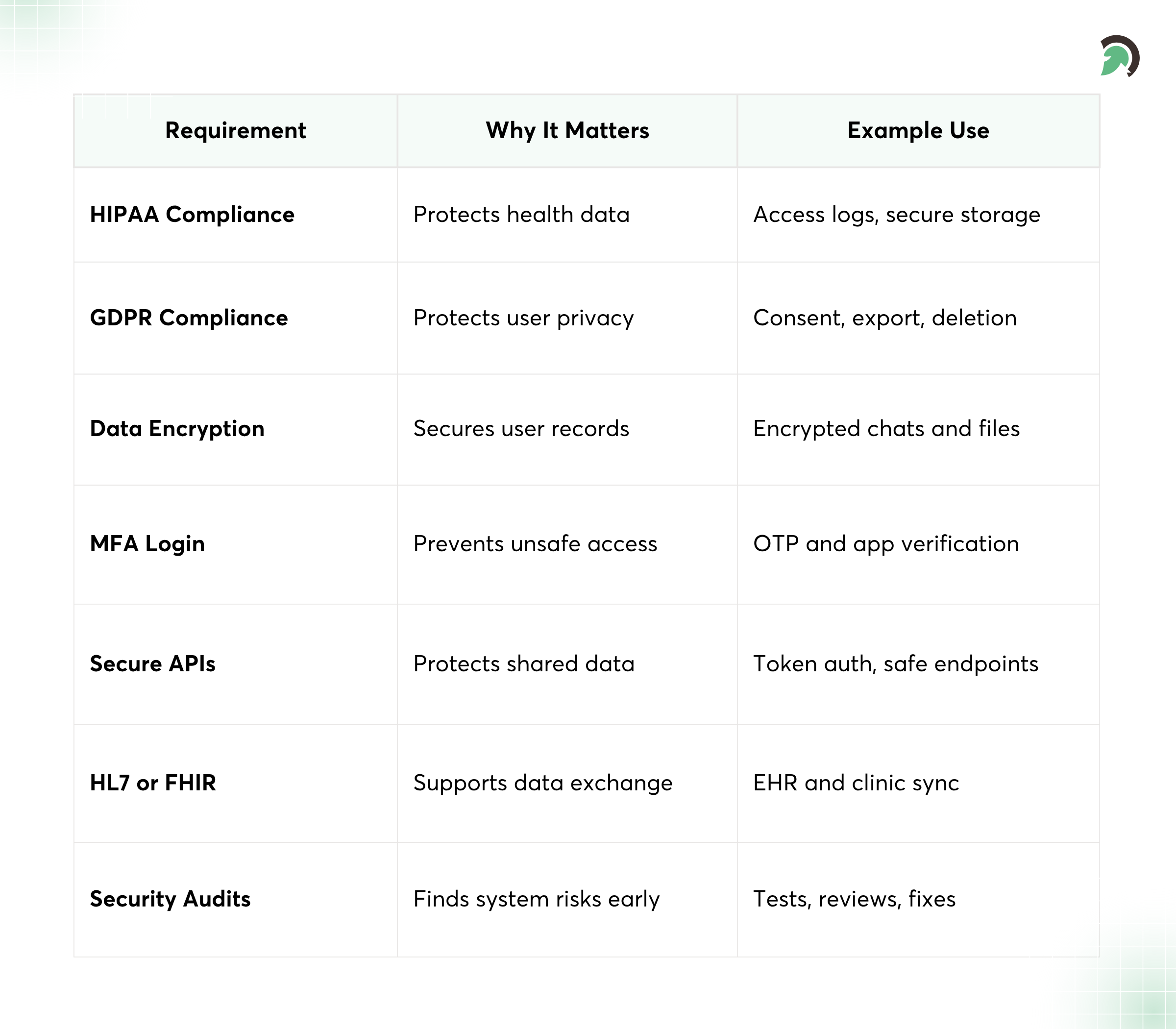
Compliance is one of the most important aspects of building a behavioral healthcare app. Since these platforms handle sensitive patient data, businesses must ensure that the app meets healthcare regulations and follows strong security practices from the start.
Key Regulations
- HIPAA (USA): HIPAA sets standards for protecting patient health information and ensures that data is stored, shared, and managed securely.
- GDPR (Europe): GDPR focuses on data privacy, user consent, and giving individuals greater control over how their personal information is collected and used.
- HL7 and FHIR Standards: These standards support interoperability and make it easier for healthcare apps to exchange data with hospitals, clinics, and other healthcare systems.
Security Measures
To keep user information safe, behavioral healthcare apps should include:
- End-to-end encryption
- Multi-factor authentication
- Secure APIs
- Regular security audits
Failure to comply with these standards can lead to legal penalties, data breaches, and a loss of user trust. That is why many businesses choose professional Behavioral Healthcare App Development Services to build secure and compliant solutions from day one.
Challenges in Behavioral Healthcare App Development
Developing a behavioral healthcare app comes with several unique challenges. Since these platforms deal with sensitive user information and mental health support, businesses need to focus on security, trust, usability, and compliance at every stage.
-
Data Privacy Concerns
Behavioral healthcare apps handle highly sensitive data such as therapy records, mood logs, and personal health details. Protecting this information requires strong encryption, secure authentication, and compliance with regulations like HIPAA and GDPR.
-
Building User Trust
Users need to feel confident that their personal information is safe and their interactions are private. A secure platform, transparent policies, and a reliable user experience all play a major role in building trust.
-
Clinical Accuracy
Features such as self-assessments, chat support, and wellness recommendations must be designed carefully. The app should provide helpful support without replacing professional medical advice, which makes clinical validation important.
-
User Retention
Many users stop using healthcare apps after the first few weeks. Keeping them engaged requires intuitive design, personalized experiences, regular reminders, and features that deliver ongoing value.
-
5. Integration with Healthcare Systems
Integrating with EHRs, telehealth platforms, and other healthcare systems can be complex. It often involves technical challenges, interoperability standards, and compatibility with existing provider workflows.
Addressing these challenges requires careful planning, the right technology strategy, and strong expertise in Behavioral Healthcare App Development.
Cost of Developing a Behavioral Healthcare App
The overall development cost depends on the scope, complexity, and requirements of the solution. A simple app with limited functionality will require less effort than a feature-rich platform designed for long-term scalability, compliance, and integrations.
Key Cost Drivers
- App complexity and feature set
- Platform choice such as iOS, Android, or web
- Compliance and security requirements
- Third-party integrations
- Custom UI/UX design needs
- Development team structure and expertise
- Ongoing maintenance and future enhancements
In most cases, businesses should plan development budgets based on their product goals, target users, and compliance needs rather than fixed estimates. This helps create a more realistic roadmap for building a secure and scalable behavioral healthcare app.


Future of Behavioral Healthcare Apps
The future of behavioral healthcare apps is driven by innovation and personalization.
Key Trends
- AI-Powered Therapy: Advanced AI systems providing real-time emotional support.
- Predictive Analytics: Early detection of mental health issues through data analysis.
- Wearable Integration: Continuous monitoring of physical and emotional health.
- Preventive Care Models: Focus on early intervention rather than treatment.
As technology advances, Behavioral Healthcare App Development will continue to evolve, offering more proactive and personalized care solutions.
Conclusion
Behavioral healthcare apps are no longer optional. They are becoming essential parts of modern healthcare ecosystems by offering scalable, accessible, and personalized support for some of today’s most pressing mental health challenges.
From understanding user needs to ensuring compliance and selecting the right technology stack, building a successful app requires careful planning, technical expertise, and a strong understanding of both healthcare and digital innovation.
Whether you’re a startup, healthcare provider, or enterprise, investing in a well-designed Behavioral Healthcare App can create a meaningful impact while opening new opportunities for growth.
If you’re planning to build a secure, scalable, and user-centric solution, partnering with a reliable Behavioral healthcare app development company can make all the difference. With experience in building tailored digital solutions, EvinceDev can help organizations turn their behavioral healthcare app idea into a practical, high-performing product.