
Most organizations still believe leadership decisions are driven by experience, credentials, and proven track records.
But when you look at how the world’s most valuable companies actually choose their leaders, the pattern looks very different.
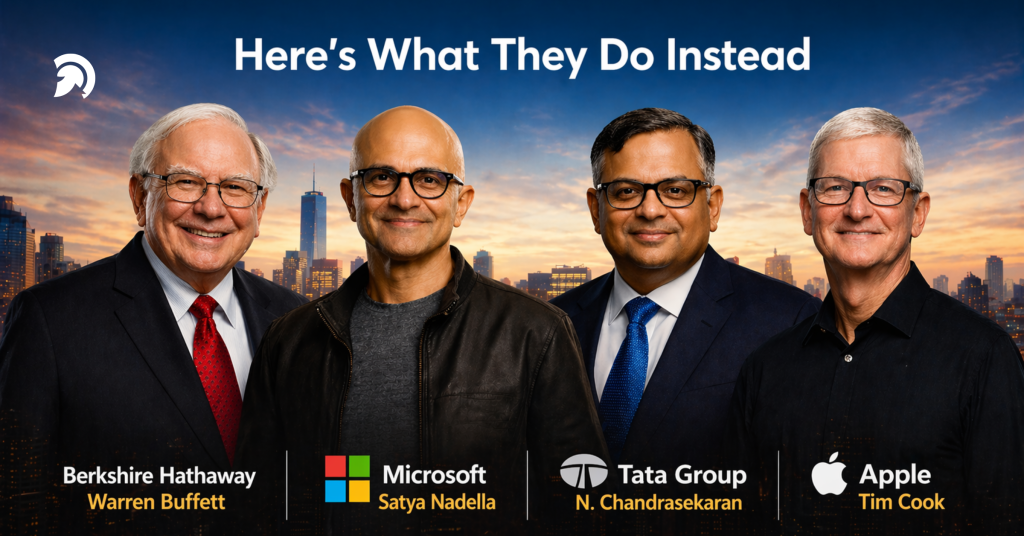
In a recent LinkedIn article, Maulik Pandya, Founder & CEO of EvinceDev, breaks down how global leaders like Berkshire Hathaway, Microsoft, Tata Group, and Reliance make some of their most critical leadership decisions.
The insight challenges a deeply rooted assumption: at the highest levels, qualifications alone are rarely the deciding factor.
Instead, these organizations prioritize something far less visible but far more decisive: trust.
Here Are a Few Key Ideas From the Article:
- Leadership gaps are rarely about capability
At the director and executive level, most candidates are already qualified. What often determines success or failure is whether the organization truly trusts its judgment. - Trust becomes the deciding factor in high-stakes roles
Whether it’s succession planning or navigating large-scale transformation, trust influences who gets the responsibility to lead when it matters most. - Culture is shaped by who gets promoted
Leadership decisions are not just operational choices. They define how teams behave, collaborate, and make decisions across the organization.
“The most qualified person in the room is not always the right choice. The most trusted person in the room almost always is.”
– Mr. Maulik Pandya, Founder & CEO, EvinceDev
- Long-term thinking outweighs resume strength
The leaders who create lasting impact are often those trusted to make the right calls in uncertain situations, not just those with the strongest credentials on paper.
This perspective pushes organizations to rethink how they evaluate leadership readiness, especially as teams scale and decisions become more complex.
“Credentials open doors. Trust builds empires.”
– Mr. Maulik Pandya, Founder & CEO, EvinceDev
It also raises a critical question for founders, executives, and hiring leaders:
Are you promoting based on what’s visible on a resume, or what’s been proven over time?
Read the full LinkedIn article by our CEO, Mr. Maulik Pandya, to explore how the world’s most successful companies approach leadership differently.