

Key Takeaways:
- AI in Transport: AI improves medical transport with smart dispatch, routing, and automation for faster, reliable operations.
- Faster Dispatching: AI-driven dispatch systems reduce delays and assign the right vehicle based on urgency and availability.
- Route Optimization: Real-time AI routing cuts travel time, fuel costs, and ensures timely patient pickups and drop-offs.
- Better Patient Care: Improved coordination and tracking enhance patient experience and reduce missed appointments.
- Cost Efficiency: AI reduces operational costs through automation, optimized fleet use, and reduced manual errors.
- Scalable Systems: Modern platforms are built to scale with growing demand, supporting complex healthcare transport needs.
- Compliance Ready: Secure systems ensure HIPAA and data compliance while handling sensitive patient and billing data.
- Future-Ready: Tech AI enables predictive analytics, automation, and integration with evolving healthcare technologies.
Healthcare delivery does not begin at the hospital door. For millions of patients, especially those requiring ongoing care, the journey to and from medical facilities plays a critical role in outcomes. Yet, transportation remains one of the most overlooked inefficiencies in healthcare systems.
Traditional transport systems often rely on manual coordination, fragmented communication, and reactive decision-making. These gaps lead to delays, missed appointments, rising operational costs, and poor patient experiences.
This is where AI-powered medical transport software development is transforming the landscape. By integrating intelligent automation, real-time decision-making, and predictive analytics, healthcare organizations can streamline operations and improve service reliability.
In this guide, we will break down everything you need to know about building advanced transport systems, including features, AI capabilities, development processes, costs, and future trends. Whether you are a hospital, logistics provider, or startup, this guide will help you understand how to build scalable and efficient transport systems.
Quick Stat:
According to the American Hospital Association, around 3.6 million people in the U.S. miss or delay medical care each year due to a lack of transportation, highlighting a critical gap in healthcare accessibility.
What Is Medical Transport Software?
Medical transport software is a digital solution designed to manage, coordinate, and optimize patient movement between locations. These systems are widely used across emergency services, non-emergency medical transportation (NEMT), and hospital logistics.
At its core, medical transport software development focuses on building platforms that enable scheduling, dispatching, tracking, and communication between patients, drivers, and healthcare providers.
Types of Medical Transport Systems
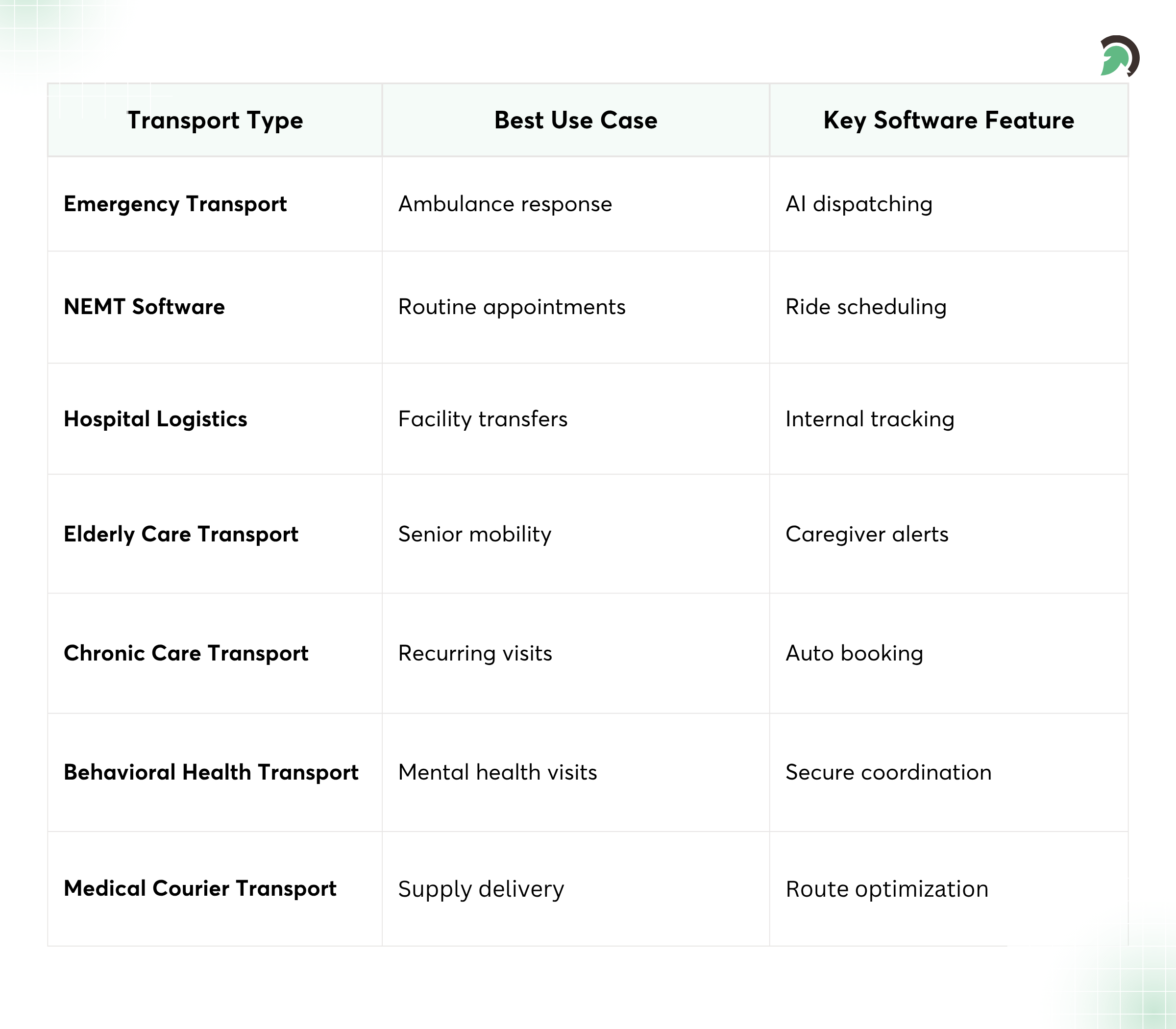
- Emergency Transport Systems: Ambulance dispatch and emergency response coordination
- Non-Emergency Medical Transportation (NEMT): Transport for routine appointments, dialysis, therapy, and elderly care
- Hospital Logistics Systems: Internal patient transfers between departments or facilities
Key Stakeholders
- Hospitals and clinics
- Transport service providers
- Insurance companies
- Patients and caregivers
Modern platforms often evolve into a full medical transportation management system, integrating operations, billing, compliance, and analytics into a single ecosystem.
How AI Is Transforming Medical Transportation
Traditional transport systems struggle with inefficiencies such as manual scheduling, a lack of real-time updates, and poor resource utilization. These issues directly impact patient care and operational costs.
The adoption of AI in medical transportation addresses these challenges by introducing intelligence into every stage of the workflow.
Key Limitations of Traditional Systems
- Static route planning
- Delayed response times
- Manual dispatch decisions
- Limited data insights
How AI Solves These Challenges
- Automated dispatching based on real-time data
- Dynamic route optimization
- Predictive demand forecasting
- Smart communication systems
Organizations adopting AI medical transport solutions are seeing measurable improvements in efficiency, cost savings, and patient satisfaction.
Benefits of AI Integration
- Faster response and turnaround times
- Reduced fuel and operational costs
- Improved patient experience
- Better fleet utilization
- Data-driven decision-making
AI is not just an upgrade. It is redefining how healthcare transportation operates at scale.
Quick Stat:
According to Fortune Business Insights, the global AI in healthcare market was valued at USD 39.34 billion in 2025 and is projected to grow from USD 56.01 billion in 2026 to USD 1,033.27 billion by 2034, at a CAGR of 43.96%.
Core Features of AI-Powered Medical Transport Software
Building a robust system requires a combination of user-centric features and operational tools. A well-designed platform supports patients, drivers, and administrators seamlessly.
Patient-Side Features
Patients need convenience, transparency, and reliability.
- Easy booking and scheduling
- Real-time vehicle tracking
- Automated notifications and alerts
- Digital payments and insurance support
- Ride history and documentation
These capabilities improve accessibility and make modern patient transport solutions more reliable.
Driver and Staff Features
Drivers and field staff require tools that simplify execution.
- Navigation with AI-based route optimization
- Trip management dashboards
- Status updates and check-ins
- In-app communication with dispatch teams
These features are critical for efficient medical fleet management and ensuring timely service delivery.
Admin Panel Features
The administrative layer powers the entire system.
- Fleet and driver management
- Real-time dispatch control
- Performance analytics and reporting
- Billing and invoicing tools
- Compliance monitoring
A strong backend transforms the platform into a complete healthcare transportation platform capable of handling complex workflows.
AI Capabilities in Medical Transport Software
The true value of modern platforms lies in AI-driven capabilities. These features move systems from reactive to proactive.
1. Smart Dispatching
AI automatically assigns vehicles based on proximity, availability, patient condition, and priority level. This eliminates manual decision-making and reduces delays.
2. Route Optimization
AI analyzes traffic conditions, road closures, and time constraints to suggest optimal routes. This ensures faster arrivals and reduces fuel consumption.
3. Predictive Demand Forecasting
By analyzing historical data, AI predicts peak demand periods, helping organizations allocate resources more efficiently.
4. AI Chatbots and Virtual Assistants
Patients can interact with chatbots to book rides, check status, or get assistance. This reduces dependency on manual support teams.
5. Fraud Detection and Compliance Monitoring
AI helps identify anomalies in trip data and billing patterns, ensuring compliance and reducing fraud risks.
6. Predictive Maintenance
Vehicles can be monitored for performance issues. AI predicts maintenance needs, reducing breakdowns and improving service reliability.
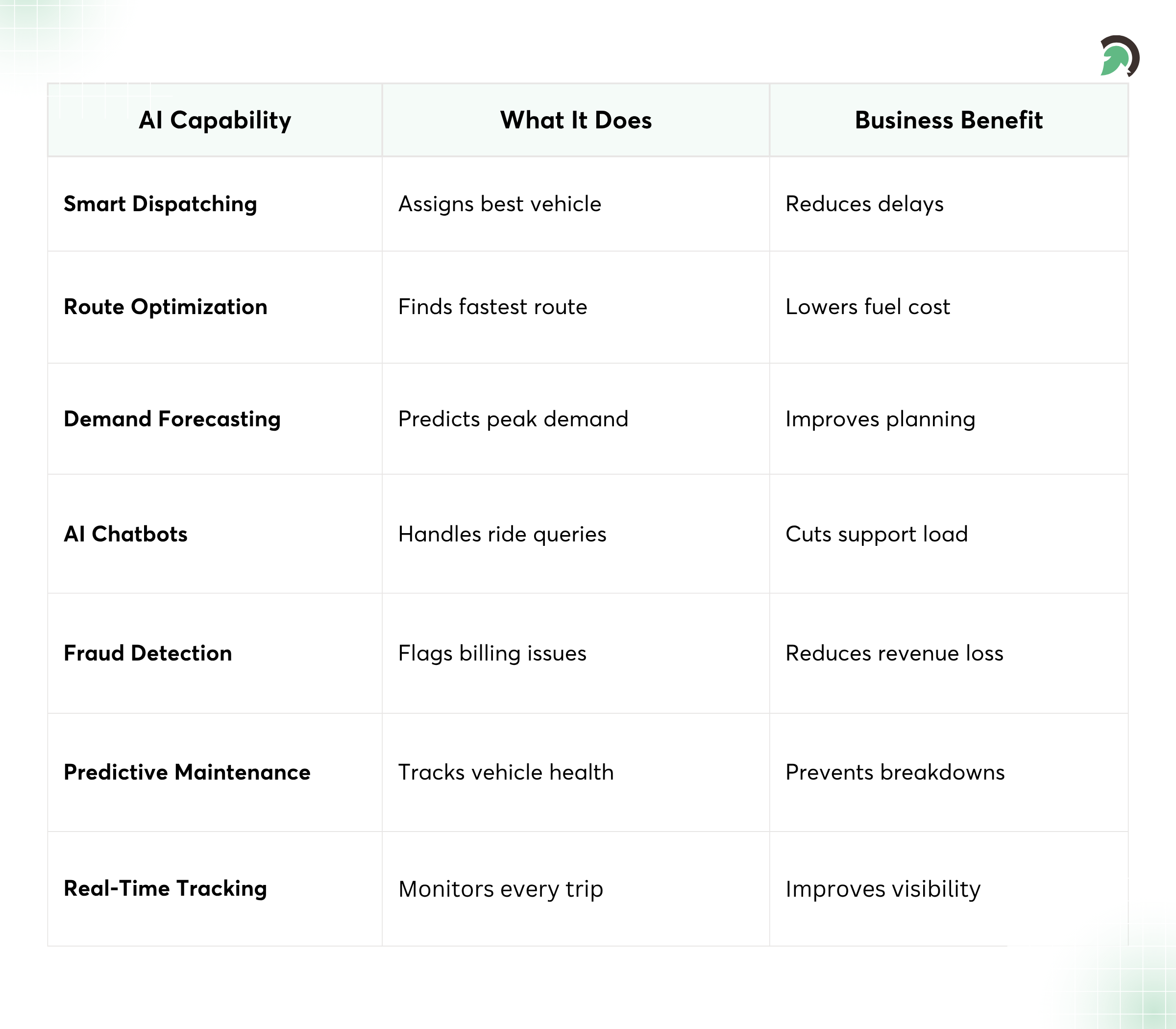
These innovations highlight how AI in medical transportation is enabling smarter, safer, and more efficient systems.
Compliance and Security Considerations
Healthcare data is highly sensitive, making compliance a top priority.
Key Compliance Standards
- HIPAA for patient data protection (US)
- GDPR for data privacy (Europe)
Security Measures
- Data encryption (at rest and in transit)
- Role-based access control
- Secure authentication protocols
- Audit logs and monitoring
Systems that handle billing must also ensure accuracy and transparency, especially when integrating a medical transportation billing system.
How to Develop AI-Powered Medical Transport Software: Step-by-Step
A structured development approach ensures successful implementation.
Step 1: Requirement Analysis
Identify use cases such as NEMT, emergency transport, or hospital logistics. This stage defines the scope and features.
Step 2: UI/UX Design
Design intuitive interfaces for patients, drivers, and administrators. Accessibility is especially important in healthcare applications.
Step 3: MVP Development
Start with essential features like booking, dispatching, and tracking. This approach reduces time to market.
Step 4: AI Integration
Introduce intelligent features such as automated dispatching and predictive analytics.
Step 5: Testing and QA
Conduct rigorous testing for performance, security, and usability.
Step 6: Deployment
Deploy on cloud infrastructure with monitoring tools in place.
Step 7: Maintenance and Scaling
Continuously improve the system with updates, feature enhancements, and AI model optimization.
Organizations investing in AI-powered medical transport software development should focus on long-term scalability rather than just initial deployment.
Use Cases and Real-World Applications
AI-driven platforms are already transforming multiple areas of healthcare transport.
Hospital Patient Transfers
Hospitals use digital systems to manage internal and inter-facility patient movement efficiently.
- NEMT Providers: Companies offering NEMT software development solutions help patients attend routine appointments without delays.
- Emergency Response Systems: AI improves ambulance dispatch speed and coordination during critical situations.
- Elderly and Chronic Care Transport: Regular transportation for elderly or chronically ill patients becomes more predictable and reliable.
- Behavioral Healthcare Transport: Transport plays a critical role in mental health care. Integrated behavioral healthcare software development solutions ensure safe and coordinated patient movement.
These systems also align with broader behavioral healthcare solutions, ensuring continuity of care beyond clinical settings.
Challenges in Development
Despite the benefits, building AI-powered medical transport software comes with technical, operational, and regulatory challenges. Planning for them early helps ensure long-term success.
- Regulatory Compliance: Platforms must meet healthcare data regulations such as HIPAA and GDPR, requiring secure data handling, access controls, and audit logs.
- Real-Time System Reliability: Live tracking, dispatching, route updates, and communication must work without delays to avoid service disruptions.
- Integration With Legacy Systems: Connecting with EHR, billing, scheduling, and fleet systems can be complex but is essential for smooth workflows.
- AI Model Accuracy: AI features need clean, reliable data to deliver accurate dispatching, forecasting, routing, and maintenance predictions.
- Data Privacy and Security: Sensitive patient, location, and billing data must be protected with encryption, authentication, and continuous monitoring.
- Scalability and Performance: The system should handle growing users, vehicles, trips, and integrations without slowing down.
Future Trends in AI Medical Transport
The future of healthcare transportation is moving toward smarter, more connected, and predictive systems. As AI medical transport solutions evolve, they will help providers improve response times, patient safety, fleet efficiency, and care coordination.
- Autonomous Medical Vehicles: Self-driving medical vehicles may support non-emergency transport, elderly care mobility, and hospital logistics in the future.
- AI-Driven Emergency Response: AI will help emergency teams analyze traffic, patient urgency, vehicle availability, and location data to improve dispatch speed.
- Integration With Wearable Devices: Wearables can share real-time health data, helping transport teams monitor patient conditions during pickup and transit.
- Real-Time Patient Health Monitoring: Connected systems can track vital signs and alert healthcare teams if a patient’s condition changes during transport.
- Smart City Healthcare Infrastructure: AI-powered transport platforms may connect with smart traffic systems, hospitals, and emergency networks for faster routing.
- Predictive and Preventive Care Support: AI can help identify transport demand patterns, missed appointment risks, and high-need patient groups before issues occur.
Quick Stat:
According to Grand View Research, the global artificial intelligence in healthcare market was estimated at $36.67 billion in 2025 and is projected to reach $505.59 billion by 2033, growing at a CAGR of 38.90% from 2026 to 2033. This growth is driven by rising demand for better efficiency, accuracy, and patient outcomes in healthcare.
Why Healthcare Providers Need AI Medical Transport Software
Healthcare transportation is becoming a strategic component of patient care.
Key Reasons Healthcare Providers Need It
- Improves patient access to timely care
- Reduces delays and missed appointments
- Enhances coordination between patients, drivers, and care teams
- Supports better route planning and fleet utilization
- Improves visibility with real-time trip tracking
- Helps deliver a safer and more reliable patient experience
Early adoption of AI-powered medical transport software development provides a strong foundation for long-term growth.
Conclusion
AI-powered medical transport software is reshaping how healthcare organizations manage patient mobility, fleet operations, dispatching, billing, and care coordination. From smarter route planning to predictive analytics and real-time tracking, AI helps providers reduce delays, improve operational efficiency, and deliver better patient experiences.
For healthcare providers, startups, and transport companies, investing in the right solution is no longer just a technology decision. It is a step toward building a more reliable, scalable, and patient-focused transportation ecosystem.
With expertise in healthcare software development, AI solutions, custom logistics platforms, and behavioral healthcare software development, EvinceDev helps businesses build secure, scalable, and future-ready medical transport platforms tailored to real-world operational needs.