

Key Takeaways:
- Smarter Diagnosis: AI helps detect early signs of mental health conditions, enabling faster diagnosis and timely intervention.
- Continuous Care: AI tools provide ongoing monitoring and support, ensuring treatment stays aligned with patient progress.
- Better Engagement: Personalized recommendations and digital tools improve patient engagement and treatment adherence.
- Predictive Insights: AI analyzes patterns to predict risks like relapse, helping providers take proactive care actions.
- Clinician Support: AI supports therapists with insights and automation, improving decision-making and reducing workload.
- Scalable Solutions: AI-powered platforms help deliver mental health care at scale without compromising quality or personalization.
Mental health care is undergoing a significant transformation. Traditional treatment approaches, while effective in many cases, often rely on generalized methods that may not fully account for individual differences in behavior, lifestyle, and response to therapy. As the demand for more tailored care increases, technology is stepping in to bridge the gap.
Artificial intelligence is emerging as a powerful enabler in this space, helping clinicians and healthcare providers design more adaptive, data-driven, and responsive treatment strategies. This shift is also driving rapid growth in AI mental health software development, as organizations look to build smarter systems that can support personalized care at scale.
In this blog, we will explore how AI is reshaping mental health treatment planning, the technologies behind it, real-world applications, benefits, challenges, and what the future holds.
Quick Stat:
According to the Grand View Research report, the AI in mental health market is expected to reach over $14 billion by 2030, growing at a CAGR of more than 30%.
Why Personalized Mental Health Treatment Matters
“The World Health Organization estimates that 1 in 8 people globally live with a mental health disorder, highlighting the urgent need for scalable solutions.”
Every individual experiences mental health conditions differently. Factors such as genetics, environment, lifestyle, trauma history, and even daily habits influence how symptoms develop and respond to treatment.
Traditional mental health care often follows standardized protocols. While these frameworks provide a strong foundation, they may not always adapt quickly to changing patient needs. This can lead to delayed improvements, reduced engagement, or even treatment drop-offs.
Personalized treatment addresses this gap by tailoring care plans based on individual data. It focuses on:
- unique symptom patterns
- personal triggers and stressors
- behavioral and emotional responses
- treatment history and outcomes
With the rise of AI behavioral healthcare solutions, personalization is becoming more precise, scalable, and continuous rather than static.
Quick Stat:
McKinsey reports that telehealth utilization remains 10 to 15 times higher than pre-pandemic levels, indicating sustained demand for digital care solutions.
What Is an AI-Powered Personalized Treatment Plan
An AI-powered personalized treatment plan is a dynamic care strategy that uses data, machine learning, and predictive analytics to recommend and adjust interventions based on individual patient needs.
Unlike traditional plans that are updated periodically, AI-driven systems continuously analyze patient data to refine treatment approaches in real time.
Key components include:
- comprehensive patient assessment
- goal setting based on individual conditions
- therapy and intervention selection
- continuous monitoring and feedback
- ongoing adjustments based on progress
Modern AI-powered therapy planning software enables clinicians to make faster, more informed decisions while maintaining full control over treatment outcomes.
It is important to note that AI supports clinicians rather than replacing them. Human expertise remains central to effective mental health care.
How AI Builds Personalized Mental Health Treatment Plans
One of the most valuable aspects of AI in mental health is its ability to create a structured, adaptive workflow. This is where AI mental health software development plays a crucial role in building intelligent systems that can handle complex data and decision-making processes.
1. Data Collection
AI systems gather data from multiple sources to build a comprehensive patient profile. This includes:
- electronic health records
- psychological assessments such as PHQ-9 or GAD-7
- wearable device data like sleep and activity patterns
- patient-reported inputs such as mood logs and journals
- therapy session notes and transcripts
This data foundation is critical for developing effective AI personalized mental health software.
2. Pattern Detection and Risk Analysis
Once data is collected, AI models analyze it to identify patterns and trends. These insights help in:
- detecting early signs of mental health conditions
- identifying triggers and behavioral patterns
- predicting potential relapse risks
- understanding treatment effectiveness
Advanced AI behavioral healthcare solutions use predictive analytics to flag high-risk situations before they escalate.
3. Personalized Treatment Recommendations
Based on the analysis, AI systems suggest tailored interventions such as:
- specific therapy approaches like CBT or DBT
- guided exercises and coping strategies
- medication support insights for clinicians
- lifestyle changes, including sleep, diet, and activity
This is where AI-powered therapy-planning software is highly effective at aligning treatment with patient needs.
4. Continuous Monitoring
AI enables real-time monitoring of patient progress through:
- mood tracking
- behavioral signals
- engagement levels
- wearable data
This ongoing feedback loop ensures that treatment is always aligned with the patient’s current state.
Many AI personalized mental health software platforms integrate mobile apps to make monitoring seamless and accessible.
5. Dynamic Plan Adjustments
AI-driven treatment plans are not static. They can be updated as new patient data becomes available, helping care teams keep treatment aligned with real-time progress.
These adjustments may include:
- modifying therapy frequency
- recommending additional coping exercises
- changing care intensity based on symptom changes
- flagging patients who may need urgent clinician review
- suggesting follow-up assessments
If a patient shows improvement, the system may recommend reducing intervention intensity. If symptoms worsen, it can suggest stronger support or faster escalation.
This adaptability is a key advantage of modern behavioral healthcare IT solutions, as it helps providers deliver more responsive and personalized care.
6. Clinician Oversight and Decision Making
AI provides recommendations, but clinicians make the final decisions. This ensures:
- ethical and safe treatment practices
- contextual understanding beyond data
- human empathy and judgment
Strong behavioral health software development frameworks always include clinician-in-the-loop models to maintain quality care.
Key Use Cases of AI in Personalized Mental Health Care
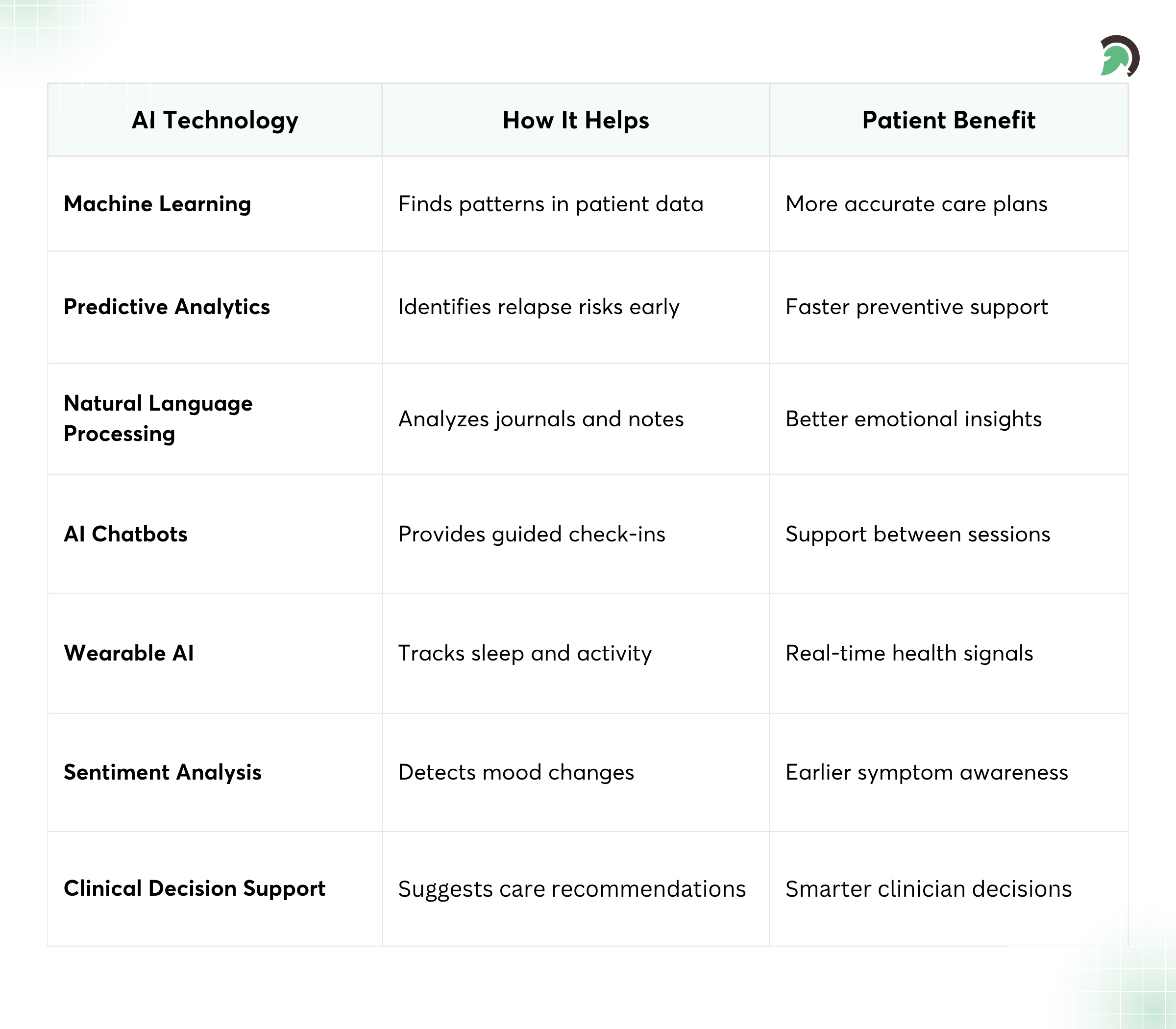
AI is being applied across various areas of mental health care, making it more accessible and effective.
- Early Detection and Diagnosis: AI models analyze behavioral and clinical data to identify early signs of conditions such as anxiety, depression, and burnout.
- AI Chatbots and Virtual Assistants: Mental health chatbots provide immediate support, guided exercises, and check-ins. These tools are becoming common in mental health app development.
- Personalized Therapy Modules: AI recommends therapy exercises tailored to individual needs, improving engagement and outcomes.
- Mood Tracking and Journaling Analysis: Natural language processing helps analyze patient journals to detect emotional patterns and shifts.
- Wearable-Based Insights: Sleep cycles, physical activity, and heart rate data provide deeper insights into mental well-being.
- Relapse Prediction: Predictive models help identify when a patient may be at risk of relapse, enabling early intervention.
- Clinical Decision Support: AI assists therapists with insights, summaries, and treatment recommendations.
These use cases highlight the growing importance of AI healthcare software development in transforming mental health services.
Benefits of AI-Driven Personalized Treatment Plans
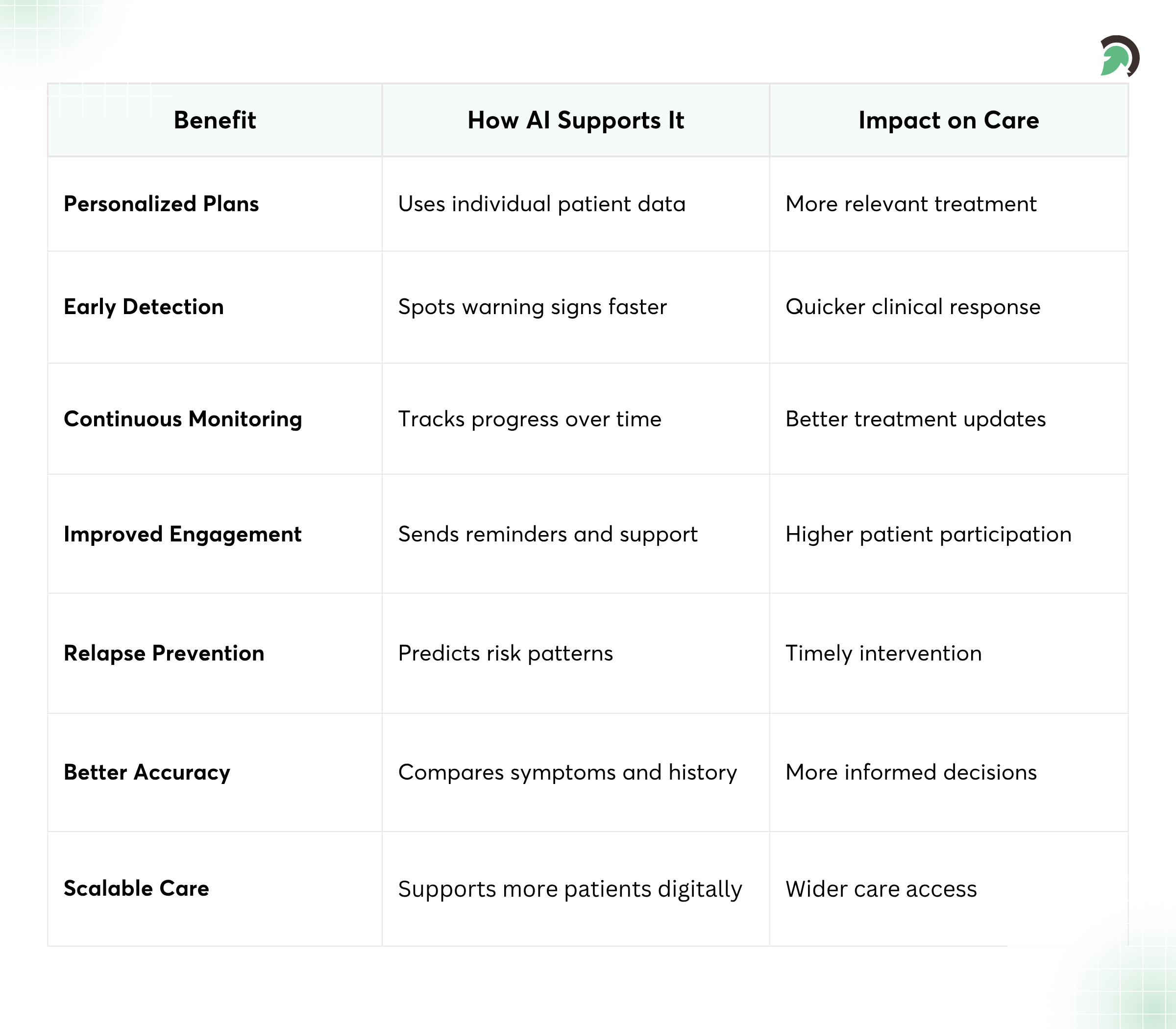
The adoption of AI in mental health care offers several advantages for both patients and providers.
- Improved Treatment Accuracy: AI helps match patients to the most effective therapies using data-driven insights.
- Faster Diagnosis and Intervention; Early detection leads to quicker treatment, reducing the severity of conditions.
- Continuous Care: Patients receive ongoing support beyond traditional therapy sessions.
- Higher Patient Engagement: Personalized recommendations increase patients’ likelihood of staying engaged in their treatment.
- Reduced Clinician Workload: Automation of routine tasks allows therapists to focus on critical aspects of care.
- Increased Accessibility: Digital platforms expand access to mental health services, especially in underserved areas.
Organizations investing in AI mental health software development are seeing significant improvements in care delivery and operational efficiency.
Quick Stat:
Research published by the National Institutes of Health (NIH) shows that AI-driven digital mental health interventions can significantly improve patient engagement, adherence, and treatment outcomes.
Real-World Applications and Examples
Several platforms are already using AI to make mental health care more accessible, responsive, and personalized. These solutions support both patients and clinicians by improving how symptoms are tracked, insights are generated, and care decisions are made.
Common real-world applications include:
- AI-driven chatbots that offer CBT-based exercises, guided check-ins, coping techniques, and emotional support between therapy sessions.
- Mood tracking apps that monitor emotional patterns, identify triggers, and suggest personalized coping strategies based on user inputs.
- Speech and behavior analysis platforms that help detect early signs of depression, anxiety, stress, or cognitive changes through voice, language, and behavioral signals.
- Automated clinical documentation systems that generate therapy notes, session summaries, and progress reports, helping clinicians reduce administrative work.
These innovations are powered by advanced AI behavioral healthcare solutions and supported by scalable custom healthcare software development frameworks. As demand for digital mental health care grows, startups and healthcare providers are increasingly investing in behavioral health software development to build secure, intelligent, and patient-focused solutions.
Challenges and Ethical Considerations
While AI offers significant benefits, it also introduces important challenges that must be addressed.
- Data Privacy and Security: Mental health data is highly sensitive. Ensuring compliance with regulations such as HIPAA and GDPR is critical.
- Algorithmic Bias: AI systems may produce biased results if trained on limited or unrepresentative data.
- Lack of Transparency: Some AI models operate as black boxes, making it difficult to understand how decisions are made.
- Over-Reliance on Technology: There is a risk of over-reliance on AI without sufficient human oversight.
- Limited Clinical Validation: Not all AI tools have been rigorously tested in real-world clinical settings.
- Ethical Responsibility: AI systems must be designed to prioritize patient safety and well-being.
- Strong behavioral healthcare IT solutions incorporate safeguards to address these challenges effectively.
Best Practices for Implementing AI in Mental Health Treatment Planning
To maximize the benefits of AI, organizations should follow best practices:
- Keep Clinicians in the Loop: AI should assist, not replace, healthcare professionals.
- Ensure Data Privacy: Use secure systems and obtain patient consent for data usage.
- Use Explainable AI: Choose models that provide clear insights into decision-making processes.
- Regularly Audit Systems: Continuously evaluate AI performance to identify and fix biases.
- Build Crisis Response Mechanisms: Ensure systems can immediately escalate high-risk cases for human intervention.
- Focus on User Experience: Design intuitive platforms that encourage patient engagement.
These principles are essential for successful AI healthcare software development and long-term adoption.
What AI Should and Should Not Do in Mental Health Care
Understanding the boundaries of AI is crucial for safe and effective implementation.
What AI Should Do
- assist in data analysis and insights
- support treatment planning
- monitor patient progress
- improve accessibility to care
What AI Should Not Do
- replace licensed therapists
- make independent diagnoses
- prescribe medication without oversight
- handle crisis situations without human intervention
Responsible AI behavioral healthcare solutions are designed with these limitations in mind.
The Role of Technology in Building Scalable Solutions
As the demand for mental health services grows, providers need digital systems that can support more patients without compromising care quality. Technology helps bring assessments, therapy workflows, patient communication, and treatment tracking into one connected ecosystem.
Mental health software development and custom healthcare software development make this possible by helping organizations build secure and scalable platforms for modern mental healthcare.
These platforms can support:
- Centralized Patient Management: Providers can manage patient profiles, assessments, treatment history, appointments, and care progress from a single system.
- AI-Driven Treatment Insights: AI can analyze patient data, mood patterns, and therapy progress to support more personalized care recommendations.
- Digital Patient Engagement: Through mental health app development, patients can access mood tracking, reminders, self-care exercises, secure messaging, and follow-up support outside therapy sessions.
- Streamlined Clinical Workflows: Behavioral health software development helps digitize manual tasks such as intake forms, documentation, scheduling, reporting, and progress monitoring.
- Scalable Care Delivery: Cloud-based platforms and behavioral healthcare IT solutions allow providers to expand services, support remote care, and maintain consistent care quality across locations.
With the right technology foundation, mental health providers can reduce operational burden, improve patient access, and deliver more timely, personalized, and coordinated care.
Future of AI in Personalized Mental Health Treatment
The future of AI in mental health care is promising and rapidly evolving.
- Hyper-Personalization: AI will use multimodal data, including voice, facial expressions, and behavioral patterns, to create even more precise treatment plans.
- Integration with Telehealth: AI will become a core component of telehealth platforms, enabling seamless remote care.
- Predictive and Preventive Care: Instead of reacting to symptoms, AI will help prevent mental health issues before they develop.
- AI and Human Collaboration: Hybrid care models will combine AI insights with human empathy to deliver the best outcomes.
- Expansion of Digital Therapeutics: AI-driven tools will play a larger role in delivering structured therapy programs.
These advancements will further accelerate innovation in AI personalized mental health software and personalized treatment plan software.
Quick Stat:
AI in healthcare is projected to exceed $180 billion by 2030, driven by adoption in diagnostics, patient monitoring, and personalized care, as revealed by a Grand View Research report.
Conclusion
AI is redefining how mental health treatment plans are created, delivered, and optimized. By using data, predictive analytics, and continuous monitoring, healthcare providers can deliver more personalized, timely, and responsive care.
However, the true value of AI lies in supporting clinicians, not replacing them. When combined with human expertise, AI can help improve treatment accuracy, patient engagement, and long-term care outcomes.
At EvinceDev, we help healthcare organizations, startups, and behavioral health providers build secure, scalable, and intelligent digital solutions. From AI mental health software development and AI healthcare software development to mental health app development, behavioral health software development, and custom healthcare platforms, our team develops solutions that support better care delivery and operational efficiency.
As mental healthcare continues to evolve, organizations that invest in AI-driven, patient-centered technology will be better positioned to improve access, personalize treatment, and deliver meaningful outcomes.