


Key Takeaways:
- Marketing Fundamentals: Core principles that help businesses attract, engage, and retain customers.
- The 4Ps: Product, price, place, and promotion shape a strong marketing strategy.
- Target Audience: Understanding customer needs leads to more relevant campaigns.
- Digital Channels: SEO, content, social media, and email work best with strong basics.
- Performance Metrics: Tracking ROI, conversion rate, and CAC helps improve results.
Marketing is the foundation of every successful business. Whether you are running a startup, managing a growing company, or leading marketing for an established brand, understanding marketing fundamentals is essential for attracting customers and driving sustainable growth.
Many businesses invest heavily in marketing activities such as social media campaigns, paid advertising, or SEO. However, without a solid understanding of the principles behind these tactics, the results are often inconsistent. Successful companies focus first on the marketing fundamentals before implementing advanced marketing techniques.
The core principles of marketing help businesses identify their ideal audience, communicate their value effectively, and create long-term relationships with customers. When organizations master these principles, they can build marketing strategies that deliver predictable, scalable results.
In this guide, we will explore the basics of marketing, the frameworks professionals rely on, and the strategies businesses can use to apply these concepts effectively. Whether you are new to marketing or looking to refine your knowledge, this guide will walk you through the essential elements of modern Marketing 101.
Quick Stat:
According to DataReportal, 32.9% of internet users discover new brands, products, and services through search engines.
What Are Marketing Fundamentals?
Marketing is often misunderstood as simply promoting products or running advertisements. In reality, marketing is about understanding customer needs and delivering value through products, services, and communication.
Marketing fundamentals refer to the core principles and strategic concepts that guide how businesses attract, engage, and retain customers. These principles help companies understand their target market, develop compelling offers, and communicate their value effectively.
The fundamentals of marketing focus on several key areas, including:
- Understanding customer needs and expectations
- Creating products or services that solve real problems
- Developing a strong and recognizable brand
- Communicating value clearly to the market
- Measuring marketing performance and improving strategies
These principles form the basis of Marketing 101, providing marketers with a structured approach to planning and executing campaigns.
When businesses overlook the marketing basics, they often focus on short-term tactics rather than building long-term relationships with customers. By understanding these principles, companies can ensure their marketing strategies align with customer needs and business goals.
Why Marketing Fundamentals Matter for Business Growth
Businesses that understand marketing fundamentals are better equipped to compete in crowded markets. Instead of relying on guesswork, they make decisions based on customer insights and data-driven strategies.
Applying the basics of marketing helps organizations build strong brands, create meaningful customer experiences, and increase revenue over time.
Here are several reasons why these principles are critical for business success:
Better Customer Understanding
Effective marketing begins with understanding customers. Businesses that invest time in learning about their audience can identify what customers want, what problems they face, and how they make purchasing decisions.
When companies understand their customers deeply, they can create products and services that truly address customer needs.
Stronger Brand Positioning
A clear marketing strategy allows businesses to define how they want to be perceived in the market. Companies that apply the fundamentals of marketing consistently are able to differentiate themselves from competitors.
Strong positioning helps brands communicate their value clearly and attract the right audience.
Higher Marketing Efficiency
Marketing budgets are often limited, especially for smaller companies. By understanding marketing fundamentals, businesses can focus their resources on the strategies and channels that deliver the best results.
Long-Term Business Growth
When companies master the marketing basics, they move beyond short-term campaigns and develop strategies that build lasting customer relationships.
This long-term perspective allows businesses to create loyal customers and sustainable growth.
Core Principles of Marketing
Before exploring frameworks and marketing models, it is important to understand the underlying principles behind marketing fundamentals. These principles guide how marketers approach strategy, communication, and customer engagement.
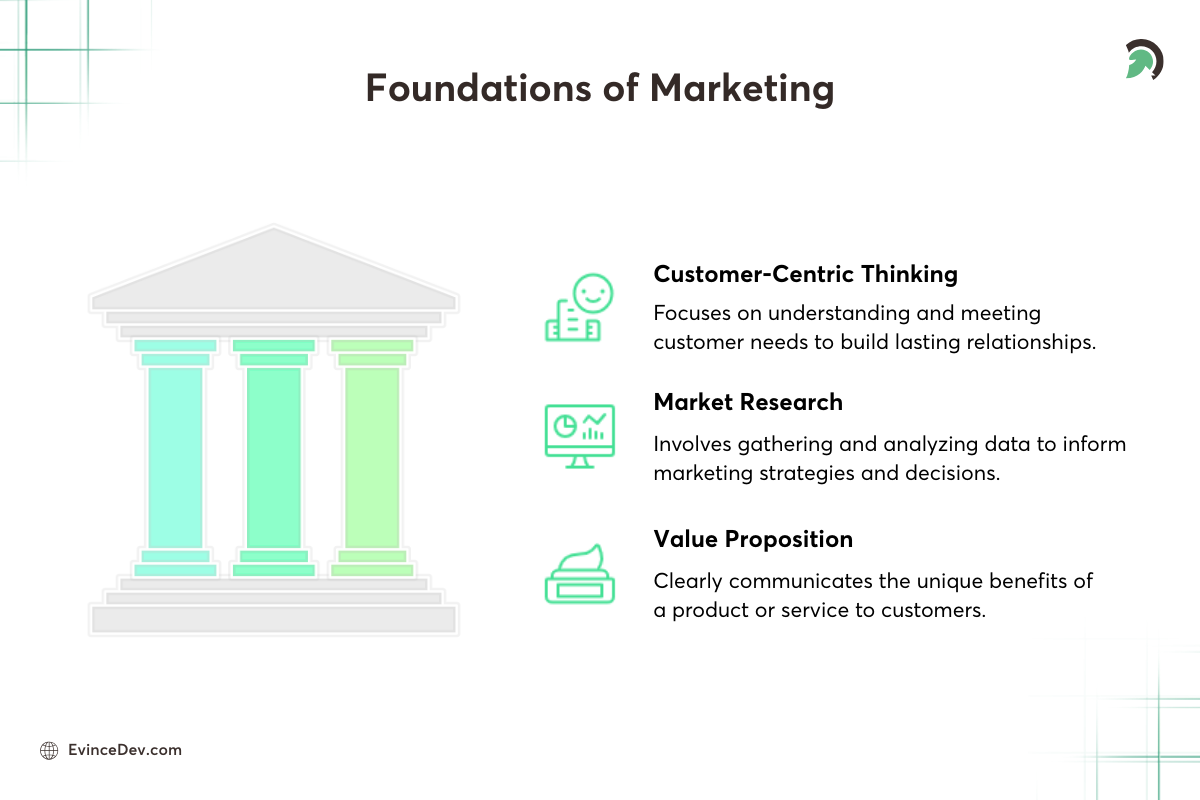
Customer-Centric Thinking
Successful marketing begins with the customer. Businesses must understand that marketing is not just about selling products but about solving customer problems and creating value.
Customer-centric organizations focus on identifying customer needs and delivering solutions that improve their lives.
Key elements of customer-centric marketing include:
- Understanding customer pain points
- Identifying motivations behind buying decisions
- Creating personalized experiences
- Building long-term relationships with customers
For example, companies like Amazon have built their entire strategy around customer convenience and satisfaction. This customer-focused mindset is one of the most important aspects of marketing fundamentals.
Market Research
Market research is a critical part of the marketing basics because it provides insights into customer behavior, industry trends, and competitor strategies.
Without proper research, businesses risk launching products or campaigns that fail to resonate with their target audience.
Market research typically includes two main types:
Primary Research
Primary research involves collecting data directly from customers.
Examples include:
- Customer surveys
- Interviews
- Focus groups
- Product feedback
Secondary Research
Secondary research involves analyzing existing data and industry reports.
Examples include:
- Market studies
- Competitor analysis
- Publicly available data and statistics
By conducting thorough research, marketers can make informed decisions and identify opportunities for growth.
Value Proposition
A value proposition clearly explains why customers should choose a particular product or service. It communicates the unique benefits a company offers and how those benefits solve customer problems.
A strong value proposition answers three essential questions:
- What problem does the product solve?
- How does the product solve it?
- Why is it better than competing solutions?
For example, a software company might emphasize ease of use and time savings as its core value proposition.
Developing a clear value proposition is a key element of marketing fundamentals, as it shapes messaging, branding, and overall marketing strategy.
The Marketing Mix: The 4Ps Framework
One of the most widely used frameworks in Marketing 101 is the marketing mix, commonly known as the 4Ps.
The marketing mix helps businesses structure their marketing strategies by focusing on four essential elements:
- Product
- Price
- Place
- Promotion
By carefully balancing these elements, companies can deliver value to customers and achieve their marketing goals.
Product
The product refers to the goods or services a company offers to the market. A successful product is designed to solve a specific customer problem or fulfill a particular need.
When developing a product, businesses must consider several factors, including:
- Features and functionality
- Product quality and reliability
- Design and user experience
- Branding and packaging
Companies that prioritize customer needs during product development are more likely to succeed in competitive markets.
Price
Price represents the amount customers pay for a product or service. Pricing decisions can influence how customers perceive a brand and whether they decide to purchase.
Businesses often use different pricing strategies depending on their goals and target market.
Common pricing strategies include:
- Competitive pricing based on market conditions
- Premium pricing for luxury or high-value products
- Penetration pricing to enter competitive markets
- Value-based pricing based on perceived benefits
Understanding pricing strategies is an essential component of marketing fundamentals because price directly affects revenue and brand positioning.
Place
Place refers to the channels through which products reach customers. Distribution decisions determine how easily customers can access a product.
Businesses must carefully select distribution channels that align with their target audience.
Common distribution channels include:
- Retail stores
- Online marketplaces
- E-commerce websites
- Direct sales channels
With the growth of digital commerce, many businesses are adopting omnichannel strategies that combine online and offline distribution.
Promotion
Promotion includes all the activities businesses use to communicate with customers and encourage purchases.
Promotional strategies help raise awareness, generate interest, and drive customer conversions.
Examples of promotional activities include:
- Advertising campaigns
- Content marketing
- Social media engagement
- Email marketing
- Public relations
Promotion is often the most visible aspect of marketing, but without strong marketing fundamentals, promotional efforts may fail to produce meaningful results.
The Extended Marketing Mix: The 7Ps
While the traditional 4Ps focus primarily on products, modern marketing often includes an extended framework known as the 7Ps marketing mix.
The additional elements are particularly important for service-based businesses.
People
Employees play a significant role in delivering services and shaping customer experiences. Training and customer service quality can greatly influence brand perception.
Process
Processes refer to the systems and workflows used to deliver products or services efficiently. Streamlined processes improve customer satisfaction and operational efficiency.
Physical Evidence
Physical evidence includes the tangible elements that influence how customers perceive a brand. Examples include store design, packaging, websites, and branded materials.
Expanding the marketing mix allows businesses to apply marketing fundamentals more effectively in service-driven industries.
The STP Marketing Model
Another important framework in Marketing 101 is the STP model, which stands for segmentation, targeting, and positioning.
This model helps businesses identify the right audience and craft marketing strategies that resonate with them.
Market Segmentation
Market segmentation involves dividing a broad audience into smaller groups based on shared characteristics.
Segmentation criteria may include:
- Demographics such as age and income
- Geographic location
- Lifestyle and interests
- Purchasing behavior
Segmentation enables businesses to create more personalized marketing campaigns.
Targeting
After identifying market segments, businesses must decide which segments to focus on.
Effective targeting involves evaluating factors such as:
- Market size and potential
- Competitive landscape
- Customer needs and preferences
- Profitability of each segment
Targeting ensures that marketing resources are directed toward the most valuable audiences.
Positioning
Positioning refers to how a brand is perceived relative to competitors.
A strong positioning strategy highlights the unique benefits that differentiate a brand in the market.
For example:
- Apple positions itself as innovative and premium
- Nike emphasizes performance and inspiration
- Tesla focuses on sustainability and technology
Effective positioning is a key aspect of marketing fundamentals because it shapes how customers perceive and remember a brand.
Understanding the Customer Journey
The customer journey describes the steps customers take before making a purchase. Understanding this journey allows marketers to create more effective strategies and deliver relevant messages at each stage.
Typical stages of the customer journey include:
Awareness
At this stage, customers become aware of a problem or need. Businesses can attract attention through educational content, advertising, and social media.
Consideration
Customers begin researching possible solutions. They compare different options and evaluate product features and benefits.
Decision
At the decision stage, customers select a product or service. Clear messaging, testimonials, and strong value propositions can influence purchasing decisions.
Retention
After a purchase, businesses should continue engaging customers to build loyalty and encourage repeat purchases.
Understanding the customer journey helps businesses apply the marketing basics effectively throughout the buying process.

Digital Marketing Fundamentals
In today’s digital environment, many marketing fundamentals are implemented through online channels.
Digital marketing allows businesses to reach global audiences, measure performance accurately, and personalize communication.
Search Engine Optimization
SEO focuses on improving website visibility in search engine results.
Key SEO practices include:
- Optimizing website content with relevant keywords
- Improving site structure and technical performance
- Building high-quality backlinks
SEO helps businesses attract organic traffic and build long-term online visibility.
Quick Stat:
According to Hubspot Marketing Statistics, 63% of consumers prefer to find information about brands and products on their smartphones, making mobile-friendly marketing strategies essential.
Content Marketing
Content marketing involves creating valuable information that educates and engages audiences.
Examples of content include:
- Blog articles
- Guides and ebooks
- Videos and tutorials
- Case studies
Content marketing helps businesses establish authority and build trust with potential customers.
Social Media Marketing
Social media platforms provide businesses with opportunities to connect directly with their audience.
Brands use social media to:
- Share content
- Engage with followers
- Promote products and services
- Build brand awareness
Platforms such as LinkedIn, Instagram, and Facebook allow marketers to reach diverse audiences and create interactive experiences.
Email Marketing
Email marketing remains one of the most effective ways to nurture leads and maintain relationships with customers.
Benefits of email marketing include:
- Personalized communication
- Direct engagement with subscribers
- High return on investment
Businesses can use email campaigns to share updates, promote offers, and provide valuable information.
Quick Stat:
FirstPageSage report reveals that email campaigns typically generate conversion rates of around 2.4% – 2.8% for both B2B and B2C brands, making email one of the highest-performing digital marketing channels.
Paid Advertising
Paid advertising allows businesses to reach targeted audiences quickly.
Examples include:
- Search engine ads
- Social media advertising
- Display advertising
Paid campaigns can generate immediate visibility and support broader marketing strategies.
Marketing Metrics and KPIs
Measuring performance is an essential part of improving marketing strategies.
Key metrics that marketers track include:
Conversion Rate
The percentage of visitors who complete a desired action, such as signing up or making a purchase.
Customer Acquisition Cost
The total cost of acquiring a new customer through marketing efforts.
Customer Lifetime Value
The total revenue a business expects to generate from a customer over time.
Return on Investment
The profitability of marketing campaigns compared to their cost.
Tracking these metrics helps businesses refine their marketing fundamentals and improve their overall strategy.
Conclusion
Marketing continues to evolve as technology advances and consumer behavior shifts. Even so, marketing fundamentals remain the foundation of every successful strategy. Businesses that understand their audience, communicate a clear value proposition, and choose the right channels are far more likely to build strong customer relationships and achieve sustainable growth.
The basics of marketing offer a reliable framework for creating strategies that are not only effective today but adaptable for the future. Whether you are exploring Marketing 101 for the first time or refining an established approach, mastering these principles is essential for long-term success.
At the same time, turning strategy into measurable business outcomes often requires the right execution partner. That is where EvinceDev can add value. With services spanning digital marketing services, web and app development, branding, and technology solutions, EvinceDev helps businesses apply these marketing principles in practical, growth-focused ways. From building a strong digital presence to supporting customer engagement and lead generation, the team can help brands transform strong marketing foundations into real business results.
Companies that consistently apply the marketing fundamentals and back them with the right expertise are better positioned to adapt to market changes, strengthen their brand presence, and build lasting customer loyalty.