
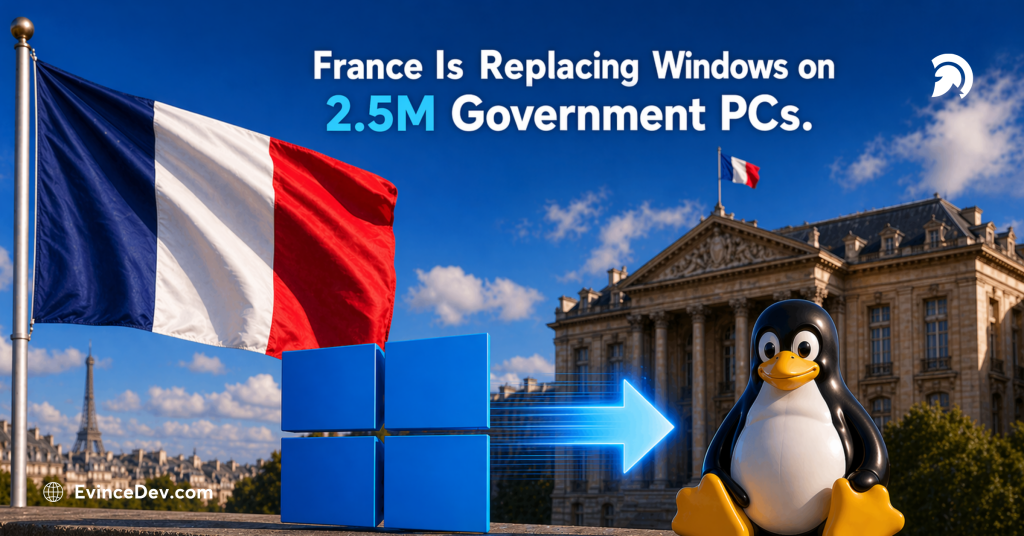
France has officially initiated a large-scale transition to reduce its reliance on foreign technology providers, marking a significant shift in how governments approach digital infrastructure. The move involves gradually replacing Microsoft Windows with Linux-based systems across public sector workstations, alongside broader efforts to adopt open-source and European-controlled technologies.
This development is not a sudden replacement but a long-term, structured initiative driven by national strategy, policy direction, and technological priorities.
What Was Announced
The transition has been led by DINUM (Direction Interministérielle du Numérique), France’s central digital authority responsible for overseeing government IT strategy, as outlined in the official government announcement:
- A government-led initiative to transition workstations toward Linux-based environments
- A mandate for ministries to reduce dependency on non-European software ecosystems
- A broader push to reduce reliance on not just operating systems but also collaboration tools, cloud platforms, and digital infrastructure components
- A requirement for all ministries to submit migration and transition plans by late 2026
The initiative begins with DINUM itself adopting Linux systems, setting the foundation for wider implementation across government departments.
France’s push is rooted in a broader digital sovereignty strategy, a point also reinforced by French officials. In the official announcement, Anne Le Hénanff, Minister Delegate for Artificial Intelligence and Digital Technology, said:
“Digital sovereignty is not an option; it is a strategic necessity. Europe must equip itself with the means to achieve its ambitions, and France is leading the way by accelerating the shift towards sovereign, interoperable, and sustainable solutions. By reducing our dependence on non-European solutions, the State is sending a clear message: that of a public authority regaining control over its technological choices in service of its digital sovereignty.”
Scale of the Transition
The scope of the migration is substantial.
- Approximately 2.5 million government workstations are expected to be impacted
- It represents one of the largest public sector OS transitions globally
- The rollout will occur across multiple ministries, agencies, and administrative bodies
Given the size and complexity, the transition will be executed in phases rather than as a single rollout.
Why France Is Making This Shift
The decision is primarily driven by digital sovereignty, a concept gaining importance across Europe.
-
Reducing Dependence on Foreign Technology
France aims to minimize reliance on US-based technology providers such as Microsoft. By adopting open-source systems, the government can reduce vendor lock-in and maintain greater control over its digital ecosystem.
-
Greater Control Over Data and Infrastructure
Open-source systems like Linux allow full visibility into source code, enabling better oversight, customization, and governance of sensitive systems.
-
Strengthening Cybersecurity
With increased geopolitical and cybersecurity concerns, having control over software layers helps reduce exposure to external risks and improves auditability.
-
Long-Term Cost Efficiency
While migration involves upfront investment, open-source solutions can reduce licensing costs and operational dependencies over time.
More Than Just an Operating System Change
This transition is not limited to replacing Windows.
France is simultaneously working on reducing reliance across multiple layers of its digital stack, including:
- Collaboration tools such as Teams and Zoom
- Proprietary communication platforms
- Cloud services and hosting environments
- Security and monitoring tools
- Data infrastructure and AI systems
The goal is to build a self-reliant, interoperable, and sovereign digital ecosystem rather than making isolated changes.
Timeline and Implementation
Despite strong headlines suggesting an immediate shift, the actual rollout is gradual and structured.
Current Phase
- Policy direction established
- DINUM begins internal migration
- Ministries are being guided on transition planning
By Late 2026
- All government departments must:
- Submit detailed migration strategies
- Identify dependencies on foreign software
- Define timelines and execution plans
Long-Term Outlook
- Full implementation is expected to take several years
- Industry estimates suggest rollout could extend toward the end of the decade
No official deadline has been set for complete migration, reflecting the complexity of such a large-scale transformation.
Technology Decisions Still Evolving
One key aspect that remains open is the choice of Linux distribution.
- No single standardized distribution has been officially announced
- Different ministries may adopt different configurations
- There is potential for custom-built government distributions, similar to earlier initiatives like France’s “GendBuntu” used by the national police
This flexibility allows departments to align technology choices with their operational needs.
Part of a Larger European Trend
France’s move reflects a broader shift across Europe toward digital independence.
Countries and institutions across the region are increasingly:
- Prioritizing open-source adoption
- Investing in European cloud infrastructure
- Reducing reliance on large foreign tech providers
- Strengthening regulatory control over digital systems
This aligns with EU-level discussions around data protection, digital sovereignty, and technological resilience.
Challenges Ahead
While the vision is clear, execution will come with challenges.
1. Migration Complexity
Transitioning millions of systems requires careful planning, compatibility checks, and user training.
2. Legacy Systems
Many government workflows depend on legacy applications built around Windows environments.
3. User Adaptation
Switching to new operating systems and tools requires training and behavioral change across departments.
4. Integration and Compatibility
Ensuring seamless integration across platforms and services remains a critical factor for success.
What This Means for the Tech Industry
France’s decision signals a growing shift in how governments approach technology strategy.
For businesses and technology providers, it highlights:
- Increasing demand for open-source expertise
- Growth in Linux-based enterprise solutions
- Opportunities in custom software development and system migration
- Rising importance of compliance, security, and sovereignty-focused solutions
Organizations working in enterprise software, cloud infrastructure, and digital transformation will likely see increased demand aligned with these trends.
The Bottom Line
However, France is not moving at a fast pace towards replacing all Windows applications with Linux.
The program has been set in motion as a big project based on some national interests and is aimed at gradually transforming the technological framework of the country.
In fact, the implementation of the project will become a significant example for many countries and their governmental institutions.