
Key Takeaways:
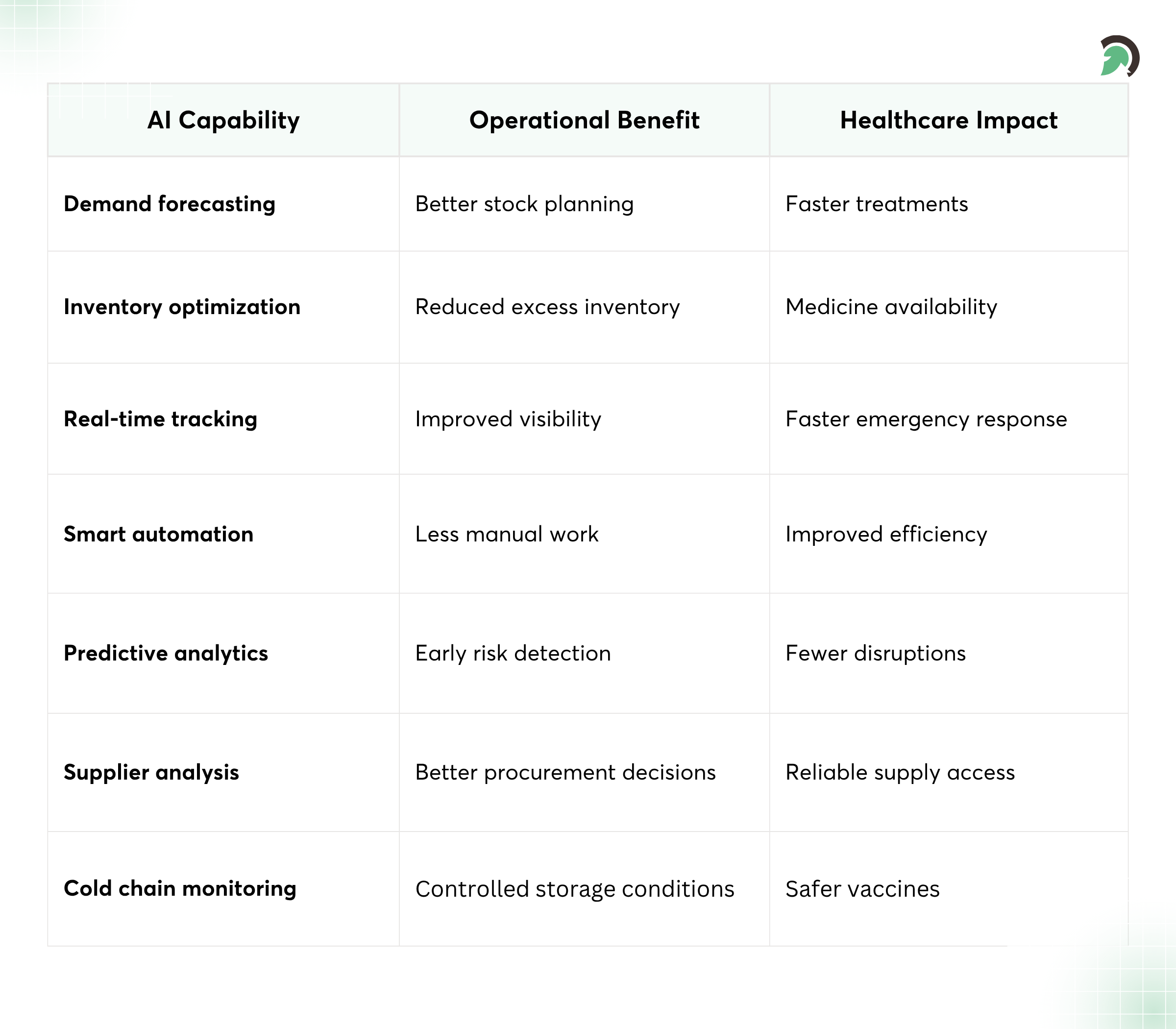
- Demand Forecasting: AI looks at past data, trends, and current needs to predict exactly what medical supplies hospitals will require.
- Inventory Optimization: AI keeps stock levels just right, cutting shortages, avoiding excess inventory, and reducing waste from expired medicines.
- Real-Time Visibility: AI tracks everything from inventory to shipments across the entire chain, giving clear updates at every step.
- Cost Reduction: AI automates routine tasks, sharpens planning, and eliminates waste to lower overall operational costs.
- Risk Management: AI spots potential issues like delays early, so hospitals can act quickly and keep supplies flowing smoothly.
- Smart Automation: AI handles procurement, orders, and reports automatically, saving time and preventing human mistakes.
- Better Patient Care: With AI ensuring supplies are always ready, treatments start faster and patient outcomes improve.
Every second counts in healthcare. A delayed shipment, an unexpected stockout, or a misplaced batch of critical supplies can affect not just hospital operations, but patient outcomes.
This is where artificial intelligence in healthcare supply chain management is changing the game.
From predicting demand for essential medicines to preventing inventory shortages, AI is helping healthcare supply chains become faster and more resilient. Instead of reacting to supply disruptions, healthcare providers can now anticipate risks in advance, optimize resources, and make data-driven decisions to maintain operational continuity.
In this blog, we’ll explore the role of AI in medical supply chain management, the challenges it addresses, key use cases, benefits, best practices, and what the future may hold for AI-driven hospital supply chains.
Quick Stat:
According to Grand View Research, the global AI in healthcare supply chain market was valued at $459.5 million in 2023 and is projected to reach nearly $5 billion by 2030, growing at a 40.3% CAGR from 2024 onward.
Challenges Faced by Healthcare Supply Chains
Explore some of the challenges faced by hospitals in the traditional approach of supply chain management.
-
Demand Uncertainty
Sudden outbreaks, seasonal illnesses, and emergencies can make demand difficult to predict.
-
Stockouts and Overstocking
Hospitals may either run out of critical supplies or hold surplus stock, leading to wastage in emergency situations.
-
Lack of Real-Time Visibility
Limited tracking makes it hard to monitor inventory, shipments, and delays across the supply chain.
-
Fragmented Supply Networks
Multiple suppliers, distributors, and healthcare providers can create coordination gaps.
-
Cold Chain Management Issues
Temperature-sensitive products like vaccines and insulin require strict storage and transport conditions.
-
Supplier Reliability Risks
Delays, quality issues, or dependency on limited suppliers can disrupt supply continuity.
-
Regulatory and Compliance Challenges
Healthcare products must meet strict safety, storage, and transportation regulations.
-
High Operational Costs
Manual processes and inefficient planning can increase procurement, storage, and delivery costs.
-
Poor Data Quality
Scattered or outdated data can lead to inaccurate decisions and weak planning.
Quick Stat:
According to McKinsey, providers can gain 11-17% gross uplift in net patient service revenue (NPSR) through AI-enabled supply chain resilience and cost efficiency using current technology.
How AI Can Address These Challenges
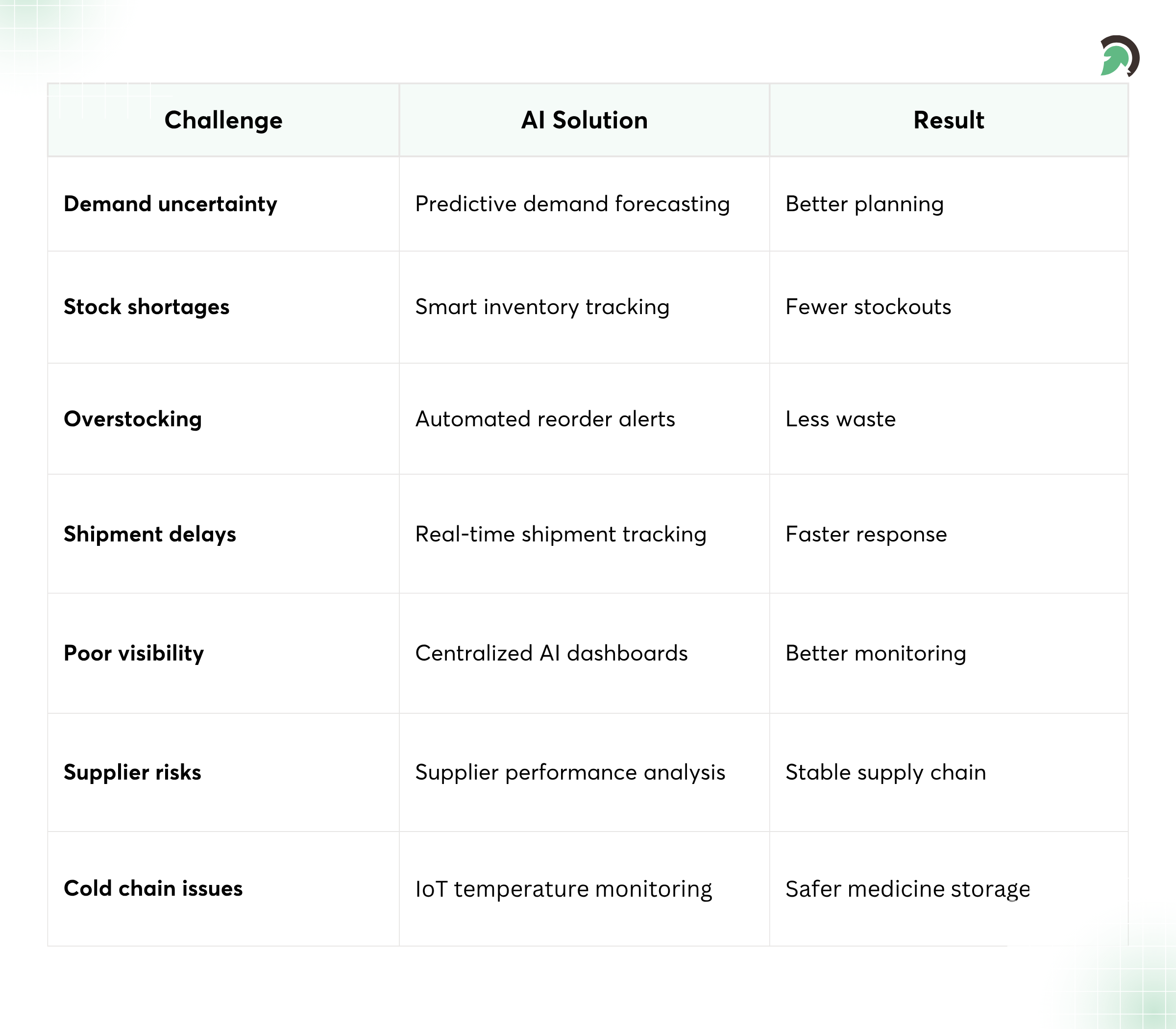
AI supports medical supply chain optimization by using data, automation, and predictive insights to reduce everyday inefficiencies.
Here’s how AI tackles the major challenges:
-
Improves Demand Forecasting
AI analyzes historical data, seasonal patterns, and external factors to predict demand more accurately. This reduces uncertainty and helps in better planning.
-
Optimizes Inventory Management
AI tracks stock levels in real time and suggests optimal reorder points. This helps prevent both shortages and excess inventory.
-
Enhances Real-Time Visibility
AI integrates data from multiple sources to provide end-to-end visibility. Stakeholders can track inventory, shipments, and delays instantly.
-
Streamlines Supply Chain Coordination
AI-powered platforms connect suppliers, distributors, and hospitals. This improves communication and reduces delays caused by fragmented systems.
-
Strengthens Cold Chain Monitoring
AI works with IoT sensors to monitor temperature and storage conditions continuously. Alerts are triggered instantly if conditions deviate from required levels.
-
Predicts and Manages Risks
AI identifies potential disruptions like supplier delays or demand spikes in advance. This allows organizations to take preventive actions.
-
Supports Compliance and Documentation
AI automates compliance checks and maintains accurate records. This reduces manual effort and ensures regulatory standards are met.
-
Reduces Operational Costs
Automation of routine tasks like procurement and order processing improves efficiency. This lowers costs and minimizes human errors.
-
Improves Data Accuracy and Insights
AI cleans and analyzes large datasets to generate actionable insights. This enables faster and more informed decision-making.
How AI Works Behind the Scenes in the Medical Supply Chain
AI supports medical supply chains through a continuous cycle of data collection, analysis, and automated decision-making across different operational systems.
-
Data Collection
AI gathers data from hospital systems, suppliers, warehouses, procurement platforms, logistics networks, and inventory management tools.
-
Data Integration and Processing
The system organizes, cleans, and connects data from multiple sources to create a unified view of supply chain operations.
-
Pattern Analysis
AI analyzes historical records, usage trends, demand fluctuations, supplier activity, and operational data to identify patterns and predict future needs.
-
Intelligent Recommendations
Based on the analysis, AI generates recommendations for procurement planning, inventory allocation, supplier selection, and shipment scheduling.
-
Continuous Learning and Improvement
As new data becomes available, AI models continuously learn from outcomes and refine future predictions and recommendations over time.
How Advanced Technologies Are Transforming Hospital Supply Chain Management
Advanced technologies are helping hospitals shift from manual, reactive supply chain processes to smarter, connected, and predictive systems.
1. Technologies That Improve Planning
- Artificial Intelligence and Machine Learning: Help forecast demand, predict shortages, optimize inventory, and support better purchasing decisions.
- Advanced Analytics and Big Data: Analyze large volumes of supply chain data to identify trends, cost gaps, usage patterns, and inefficiencies.
- Digital Twins: Create virtual models of hospital supply chains to test scenarios, plan resources, and prepare for disruptions.
2. Technologies That Improve Visibility
- Internet of Things: Uses sensors to track inventory, equipment, shipments, and storage conditions in real time.
- Blockchain: Creates secure and traceable records for medicines, medical devices, and supplies across the supply chain.
- Cloud Platforms: Centralize data and allow hospitals, suppliers, and logistics teams to access updated information from one place.
3. Technologies That Improve Automation
- Robotic Process Automation: Automates repetitive tasks such as purchase orders, invoice processing, data entry, and documentation.
- Warehouse Automation: Supports faster picking, packing, sorting, and movement of medical supplies inside warehouses.
- Smart Logistics Tools: Optimize delivery routes, shipment schedules, and transport planning for faster supply movement.
4. Technologies That Improve Safety and Compliance
- Cold Chain Monitoring Systems: Track temperature-sensitive products such as vaccines, biologics, and insulin throughout storage and transport.
- Traceability Tools: Help hospitals monitor product movement, support recalls, verify authenticity, and meet regulatory requirements.
- Predictive Risk Alerts: Identify possible supplier delays, demand spikes, stockouts, or quality issues before they affect operations.
Best Practices for Implementing AI in Medical Supply Chains
Successfully adopting AI in medical supply chains requires more than just technology. It involves the right strategy, data, and people.
- Start with Clear Objectives: Define what you want to achieve, such as reducing stockouts, improving forecasting, or lowering costs.
- Ensure High-Quality Data: AI depends on accurate and consistent data. Clean, structured, and up-to-date data is essential for reliable outcomes.
- Begin with Pilot Projects: Start small with specific use cases, such as demand forecasting or inventory optimization, before scaling across the system.
- Integrate with Existing Systems: Ensure AI tools work seamlessly with current hospital systems like ERP, inventory, and procurement platforms.
- Focus on Interoperability: Enable seamless data sharing across departments, suppliers, and logistics partners to improve coordination.
- Invest in Staff Training: Train healthcare and supply chain teams to understand and use AI-driven tools effectively.
- Collaborate with Technology Partners: Work with experienced AI vendors or solution providers to ensure proper implementation and support.
- Monitor and Measure Performance: Track key metrics such as cost savings, stock availability, and delivery timelines to evaluate impact.
- Ensure Data Security and Compliance: Protect sensitive data and comply with healthcare privacy and data-handling regulations.
- Plan for Scalability: Choose solutions that can grow with your organization and adapt to future needs.
What Is the Future of AI in Hospital Supply Chain Management
The future of AI in hospital supply chain management will focus on more autonomous, adaptive, and self-optimizing systems. Hospitals will increasingly use AI to automate replenishment, simulate supply chain risks with digital twins, and evaluate supplier reliability before disruptions occur.
AI will also play a larger role in governance, compliance monitoring, and secure data management. As these capabilities mature, hospital supply chains will become more resilient, responsive, and better prepared for future demand.
Bottom Line
AI in the medical supply chain is changing how healthcare organizations manage forecasting, inventory, visibility, and risk. It turns complex, reactive systems into smart, proactive ones. AI improves demand forecasting, inventory management, visibility, and reduces risks. This helps hospitals ensure critical supplies are available when needed.
Successful adoption requires strong data foundations, integrated systems, and a clear strategy.
Healthcare organizations often partner with experts to achieve this. Companies like EvinceDev specialize in AI solutions, data integration, and digital transformation, offering custom AI development, system integration, automation, and advanced analytics. These improve efficiency, visibility, and decision-making in supply chains. Beyond AI-driven supply chain solutions, EvinceDev also supports healthcare organizations with custom healthcare software, automation, analytics, system integration, and behavioral healthcare software solutions.
In a sector where every delay can impact patient outcomes, investing in AI is vital as it is the cornerstone of building a more resilient, efficient, and future-ready healthcare supply chain.