

Key Takeaways:
- Digital Care Rise: Behavioral healthcare is shifting toward digital-first models, making patient portals essential for access and care continuity.
- Portal Value Core: Patient portals improve engagement, streamline communication, and enhance overall patient experience in behavioral care.
- Must-Have Features: Secure messaging, telehealth, scheduling, and records access are key features in patient portal development.
- Compliance First: HIPAA compliance, encryption, and access controls are critical to protect sensitive behavioral health data.
- Better Outcomes: Improved engagement and real-time access to care plans lead to better adherence and clinical outcomes.
- Cost & Scaling: Development costs vary by complexity, but scalable portals help providers grow without increasing workload.
- Tech Stack Role: Modern technologies like cloud, APIs, and secure frameworks enable scalable and efficient portal development.
Behavioral healthcare is undergoing a major digital transformation. As the demand for mental health services continues to rise, providers are under increasing pressure to deliver accessible, efficient, and patient-centered care. Traditional systems often struggle to meet these expectations, especially when it comes to communication, engagement, and continuity of care.
This is where Patient Portal Development for Behavioral Healthcare plays a crucial role. Patient portals are no longer just an added convenience; they have become a core component of modern care delivery. They enable seamless interaction between patients and providers while ensuring privacy, compliance, and efficiency.
From therapy scheduling to secure messaging and remote consultations, patient portals are reshaping how behavioral health services are delivered. In this blog, we will explore everything you need to know about Patient Portal Development, including its features, benefits, challenges, technologies, and cost considerations.
Quick Stat:
According to CIVHC, mental health-related telehealth visits increased from 47% in 2020 to 58% in 2023, highlighting the growing shift toward digital behavioral care.
What Is a Patient Portal in Behavioral Health?
A patient portal is a secure digital platform that allows patients to access their health information and interact with healthcare providers. In behavioral health, these portals are specifically designed to support mental health workflows, therapy sessions, and ongoing patient engagement.
Unlike general healthcare portals, Patient Portal Development for Behavioral Healthcare focuses heavily on privacy, emotional sensitivity, and continuous communication. Behavioral health patients often require ongoing interaction, progress tracking, and personalized care, making these portals more dynamic and patient-centric.
Key use cases include:
- Scheduling therapy or counseling sessions
- Accessing treatment plans and progress notes
- Secure messaging with therapists
- Managing prescriptions and medications
- Participating in virtual therapy sessions
As part of broader Patient Portal Software Development, these platforms are tailored to meet both clinical and emotional needs, ensuring patients feel supported throughout their care journey.
Why Patient Portals are Critical for Behavioral Health Providers
The growing awareness around mental health has led to a surge in demand for behavioral healthcare services. However, providers often face challenges in managing patient communication, reducing administrative workload, and ensuring treatment adherence.
- Improved Patient Engagement: Patient portals empower individuals to take an active role in their care. With easy access to records, therapy schedules, and communication tools, patients are more likely to stay engaged.
- Continuous Communication: Behavioral health requires ongoing interaction. Portals provide a secure channel for communication, reducing gaps between sessions.
- Reduced Administrative Burden: Automated scheduling, digital forms, and online billing significantly reduce manual work for staff.
- Better Treatment Outcomes: Consistent engagement and access to care plans improve adherence and overall outcomes.
- Enhanced Privacy and Trust: Privacy is critical in mental health. Well-designed portals built through
- Patient Portal Development services ensure secure data handling and confidentiality.
By leveraging a healthcare portal, providers can create a more efficient, patient-friendly ecosystem that supports both clinicians and patients.
Quick Stat:
According to the U.S. Department of Health & Human Services (HHS), 95% of HRSA-funded health centers used telehealth in 2024 to deliver care, reflecting how widely virtual care has been adopted across healthcare delivery.
Key Features of a Behavioral Health Patient Portal
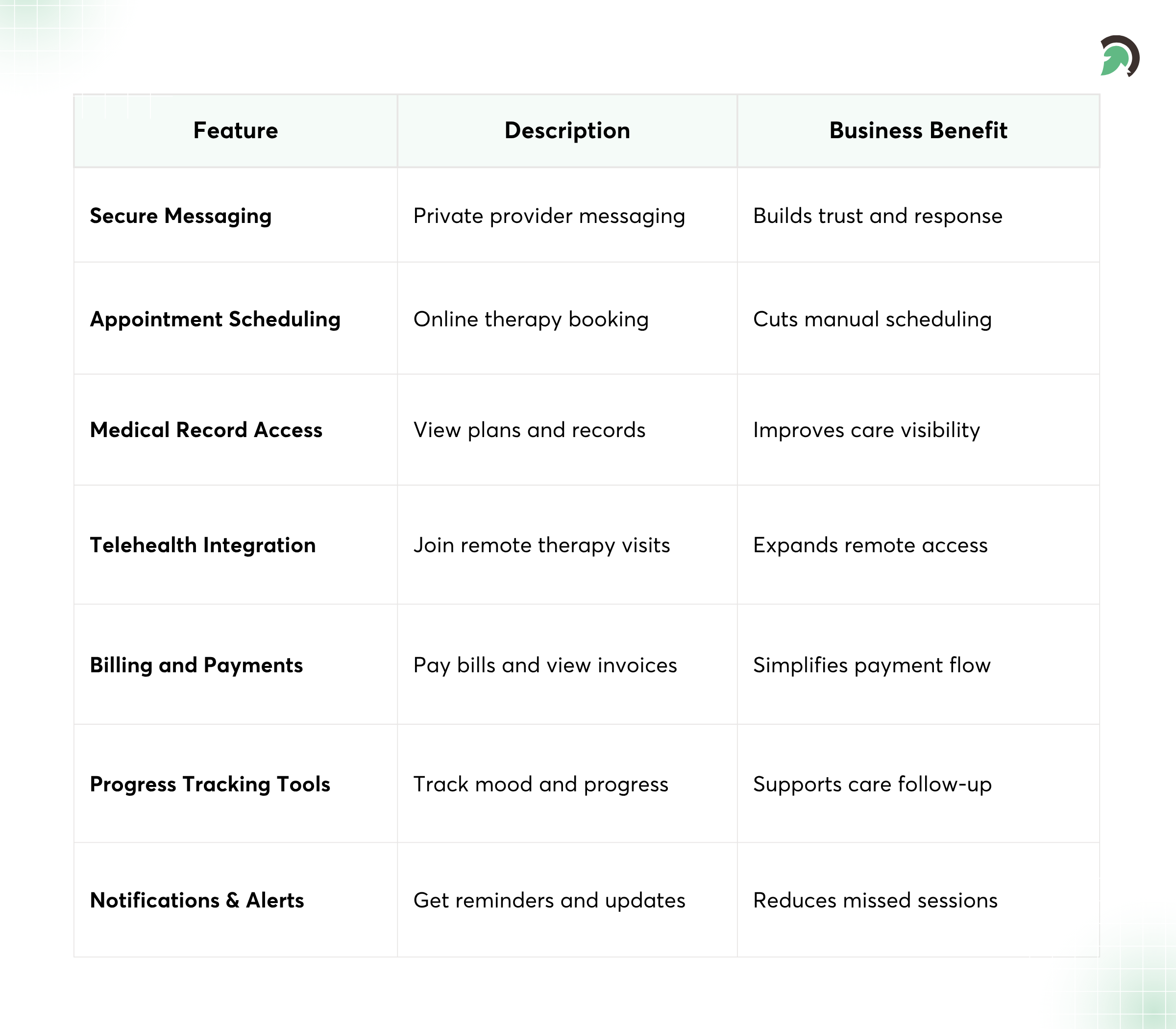
A successful portal depends on thoughtful design and feature integration. Below are the most essential features to include in Patient Portal Development for Behavioral Healthcare.
- Secure Messaging and Communication: Confidential communication is at the heart of behavioral healthcare. Patients should be able to securely message therapists, share updates, and ask questions without compromising privacy.
- Appointment Scheduling and Reminders: Self-service appointment booking reduces administrative load and improves patient convenience. Automated reminders help reduce missed sessions.
- Access to Medical Records and Treatment Plans: Patients can view therapy notes, treatment plans, and medication history, which supports transparency and engagement.
- Telehealth and Virtual Session Integration: Virtual therapy has become a standard in mental health care. Integration with video conferencing tools is essential for remote consultations.
- Billing and Payment Integration: Patients should be able to view invoices, make payments, and track billing history directly within the portal.
- Self-Assessment and Progress Tracking: Mood tracking, questionnaires, and assessments help monitor patient progress over time for both providers and patients.
Such options usually feature as part of the greater approach to Behavioral Healthcare Software Development, ensuring that portals are not stand-alone systems.
Compliance and Security Considerations
Behavioral health data is highly sensitive, making compliance and security a top priority in Patient Portal Software Development.
- HIPAA Compliance: In the United States, portals must comply with HIPAA regulations to protect patient data.
- GDPR and Global Regulations: For international platforms, GDPR and other data protection laws must be followed.
- Data Encryption: All data, both at rest and in transit, should be encrypted to prevent unauthorized access.
- Role-Based Access Control: Access should be restricted based on user roles, ensuring only authorized individuals can view specific information.
- Audit Trails: Tracking system activity helps maintain accountability and detect potential breaches.
Security is a foundational aspect of Healthcare portal development, especially when dealing with mental health records.
Challenges in Patient Portal Development for Behavioral Health
Despite the benefits, developing a behavioral health patient portal comes with its own set of challenges.
- Data Sensitivity: Mental health data requires higher levels of confidentiality compared to other medical data.
- Integration with Existing Systems: Connecting portals with EHR and EMR systems can be complex.
- User Adoption: Some patients and providers may resist adopting new technologies.
- Customization Needs: Different therapy models require tailored features and workflows.
- Balancing Usability and Compliance: Ensuring security without compromising user experience is a key challenge.
Addressing these challenges requires expertise in Behavioral Healthcare Software and a deep understanding of healthcare workflows.
Steps to Develop a Behavioral Health Patient Portal
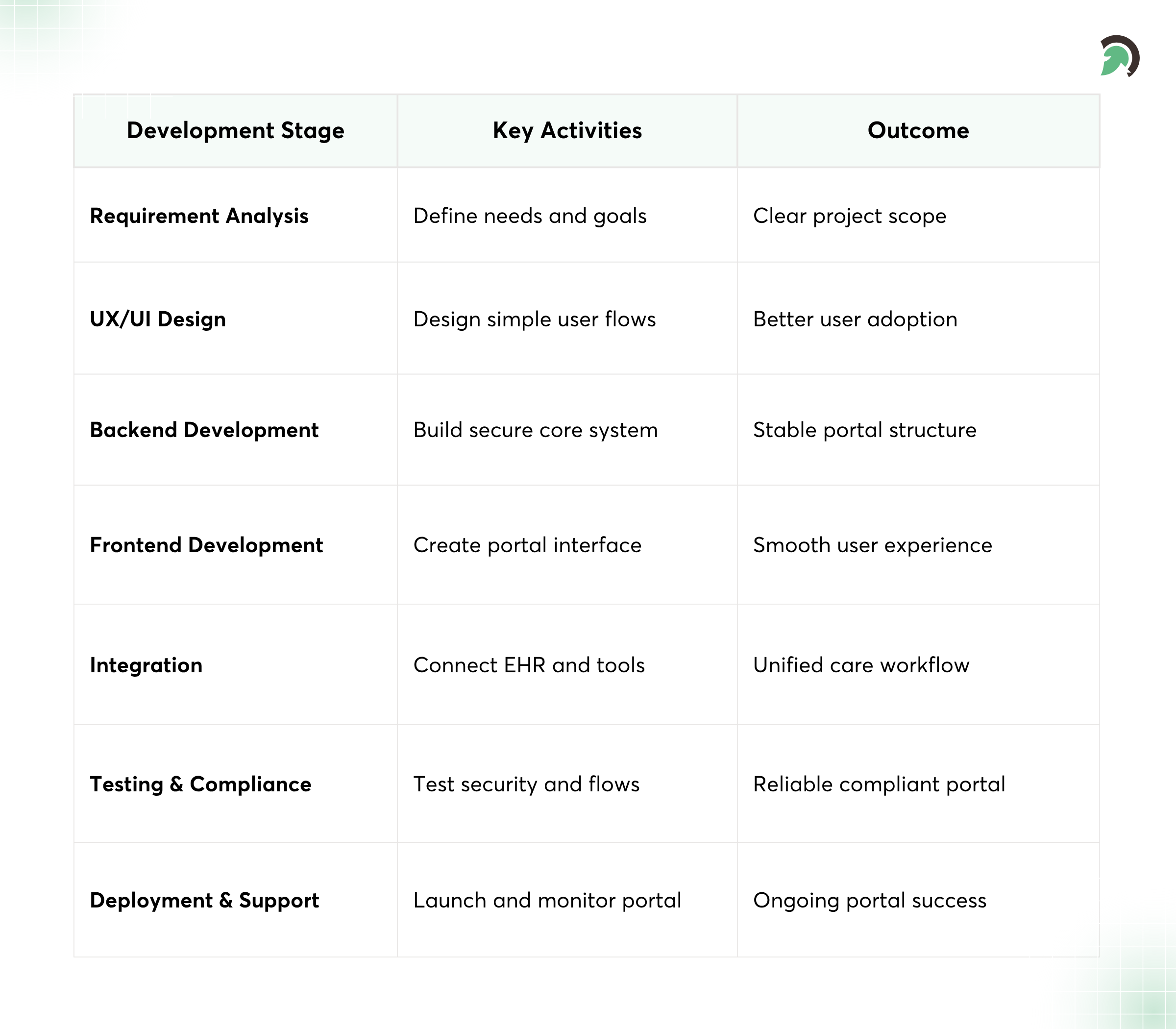
Developing a patient portal requires a structured approach to ensure success.
-
Requirement Analysis
Understanding the needs of both patients and providers is the first step. This includes identifying workflows, compliance requirements, and feature priorities.
-
UX/UI Design
Design plays a critical role in adoption. The interface should be simple, accessible, and user-friendly.
-
Development and Integration
This phase involves building the frontend and backend systems while integrating third-party tools like telehealth and payment systems.
-
Testing and Compliance Validation
Thorough testing ensures the portal is secure, compliant, and free from bugs.
-
Deployment and Maintenance
After launch, continuous monitoring and updates are essential to maintain performance and security.
A reliable partner offering Patient Portal Development services can streamline this process and ensure successful delivery.
Benefits of Patient Portal Development for Behavioral Health
Implementing Patient Portal Development for Behavioral Healthcare offers numerous benefits.
- Improved Patient Engagement; Patients stay more involved in their care through easy access to information and communication tools.
- Better Clinical Outcomes: Consistent engagement leads to improved adherence to treatment plans.
- Reduced No-Shows: Automated reminders help patients keep track of appointments.
- Operational Efficiency: Automation reduces administrative workload and improves workflow efficiency.
- Scalable Care Delivery: Portals enable providers to serve more patients without compromising quality.
These benefits highlight the importance of integrating patient portals into broader Behavioral Healthcare App Development strategies.
Future Trends in Behavioral Health Patient Portals
The future of Patient Portal Software Development is shaped by emerging technologies and evolving patient expectations.
- AI-Driven Insights: Artificial intelligence can analyze patient data to provide personalized care recommendations.
- Personalized Care Experiences: Portals will offer tailored content and treatment plans based on individual needs.
- Integration with Wearables: Devices like smartwatches can provide real-time health data.
- Advanced Telehealth Capabilities: Enhanced video platforms and virtual therapy tools will improve remote care.
- Predictive Analytics ;Data-driven insights will help providers identify risks and intervene early.
These advancements are closely linked with innovations in Behavioral Healthcare App Development and Mental Health App Development, making portals more intelligent and proactive.
How to Choose the Right Development Partner
Selecting the right partner is crucial for successful Patient Portal Development.

Key Factors to Consider
- Experience in Behavioral Healthcare Software Development: Choose a development partner with proven experience in behavioral healthcare software development, including patient-facing platforms, clinical workflows, and solutions built for healthcare-specific needs.
- Knowledge of compliance and security standards: Your development partner should understand HIPAA, data privacy, access control, encryption, and other compliance requirements needed for secure and reliable patient portal development.
- Ability to deliver customized solutions: Look for a team that can build customized patient portal solutions aligned with your workflows, care model, branding, user needs, and integration requirements.
- Strong post-launch support: Select a partner that offers post-launch support, maintenance, updates, performance monitoring, and ongoing improvements to keep the patient portal secure and effective.
Working with an experienced healthcare app development company ensures that your portal meets industry standards and delivers long-term value.
Conclusion
Behavioral healthcare is becoming more connected, more digital, and more focused on patient experience, and patient portals are an important part of that progress. They make it easier for patients to access information, stay in touch with providers, and take a more active role in their care.
For providers, a well-designed patient portal can reduce administrative friction, improve communication, and support smoother care delivery across the organization. It is not just a useful add-on anymore. It is becoming a practical requirement for organizations that want to offer modern, accessible behavioral healthcare services.
As healthcare technology continues to evolve, patient portals will keep improving through smarter automation, better usability, and more personalized experiences. Working with the right development partner helps ensure the solution is secure, scalable, and aligned with both current needs and future growth. With EvinceDev, healthcare organizations can build patient portal solutions that support better outcomes for patients and stronger operational efficiency for providers.